Why Are Most Website Chats Just Contact Forms?
Business has moved online along with much of our daily lives. With fast internet and widespread mobile devices, businesses now rely heavily on the internet to attract customers. Screens have replaced storefronts, while browser ads stand in for traditional flyers. But what about customer service? Among the many contact options offered on business websites, live chat best resembles a direct conversation with a customer.
How many business websites have chats?
To understand just how common chat features are on business websites, we conducted a study that surveyed over 3,000 websites spanning service industries, e-commerce, and the restaurant sector. Our goal was to determine how prevalent chat widgets truly are in each sector. Surprisingly, we found that only 5.9% of the websites we reviewed had a chat widget of any kind available for customer interaction.
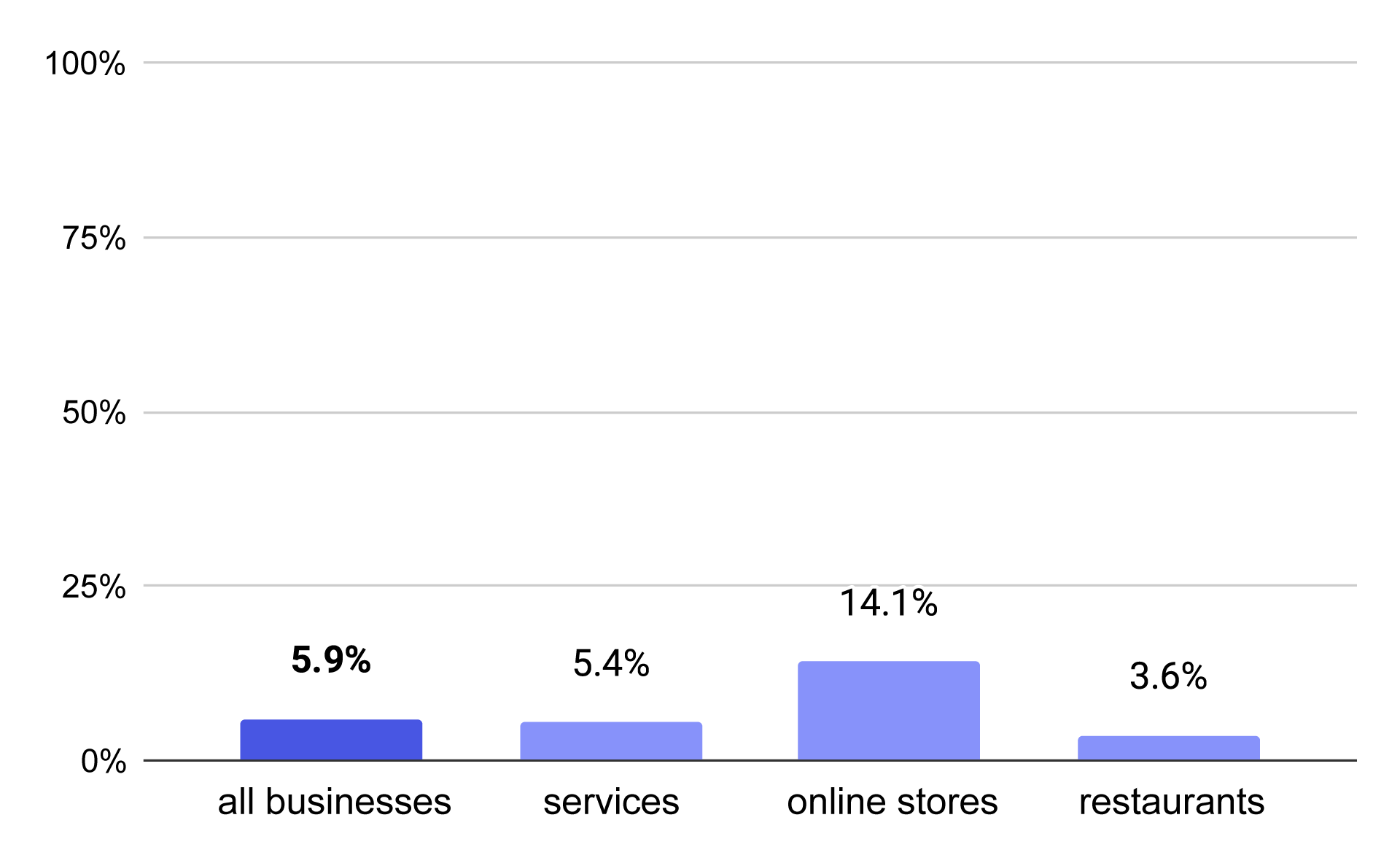
Chat widgets on business websites
But what exactly lies behind the chat widget icon? It turns out that not all chats are created equal. In most cases, clicking on a chat widget does not open a live chat but instead brings up a contact form. These forms, disguised as chats, made up a significant 78.5% of the total chat widgets encountered in our study, while actual live chat options were far less common, appearing in just 21.5% of cases. E-commerce websites showed a slightly higher rate of live chat usage, at 25.6%, while restaurant websites completely lacked live chat functionality.
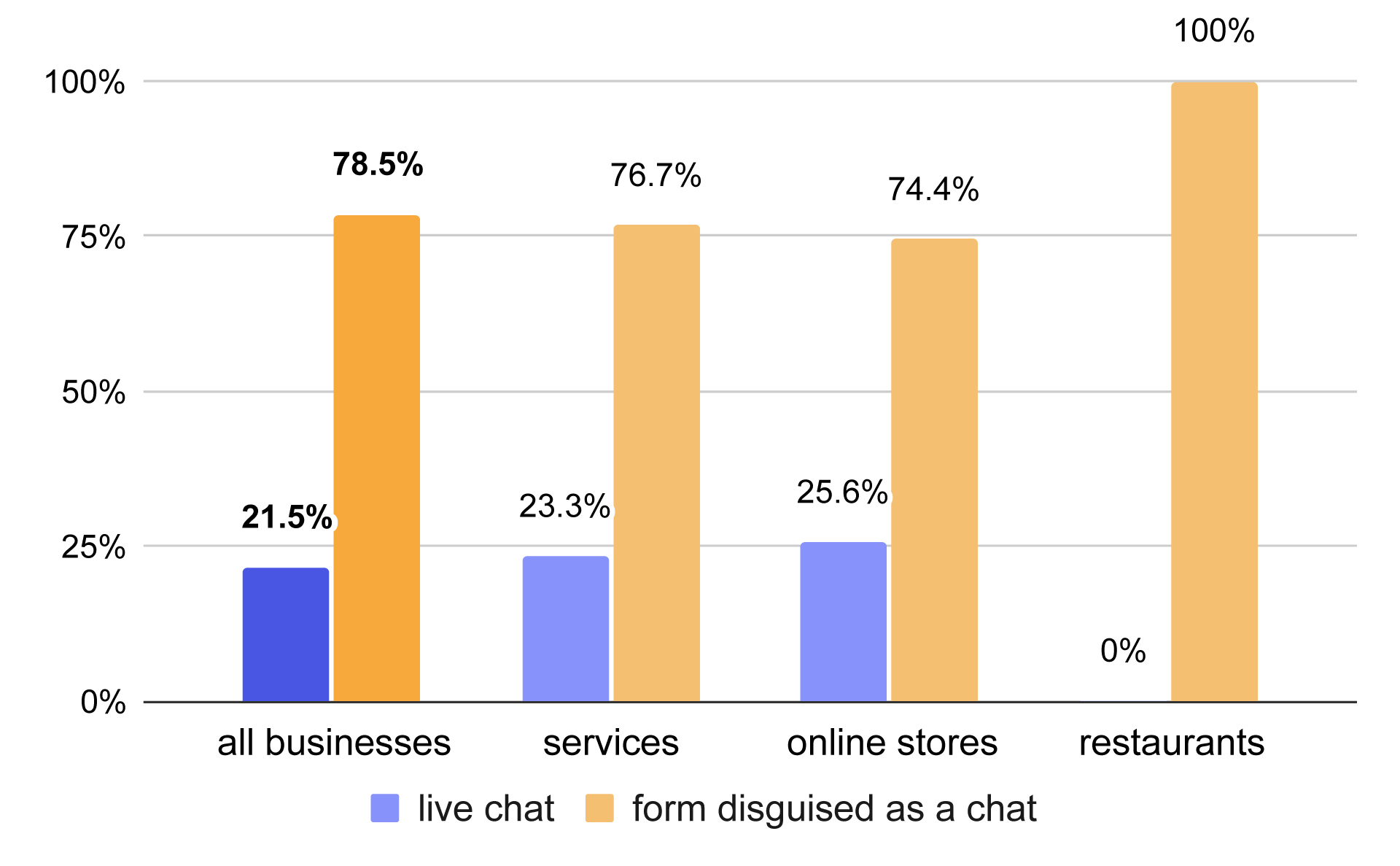
Live chats vs. chat forms
About chats that are actually forms
So why is it that most chat widgets on business websites are actually forms rather than true live chats? The reasons come down to two primary factors:
-
Many businesses
lack the resourcesto maintain a full-time live support team. -
Chat forms serve as an effective way to gather contact information from potential
leads.
Most companies that implement fake chat widgets do so primarily to capture leads. Because a chat icon is prominently displayed as soon as a customer visits the site, it naturally attracts more engagement than traditional forms, newsletters, or other methods of collecting email addresses and phone numbers. Adding to this appeal, many of these chat forms indicate an online status, often through a green dot or similar icon, giving the appearance of live availability. Our study found that 37.9% of fake chats displayed an online status.
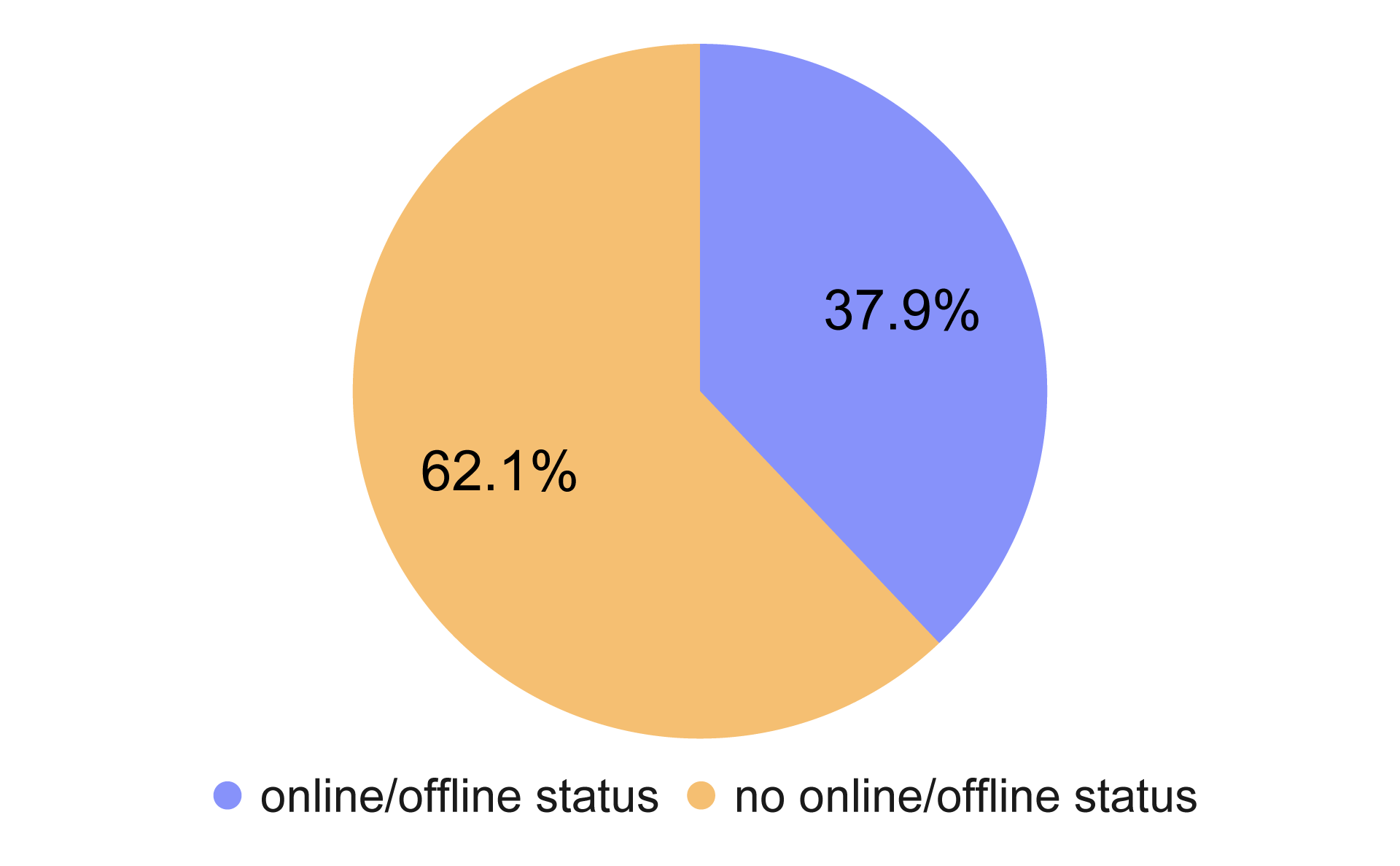
Online/offline status in disguised chat forms
Although contact forms disguised as chats can be beneficial for business owners, they are typically poorly received by customers. This setup often feels like clickbait; customers expect to engage in a live conversation only to realize they’ve been redirected to a static form. This practice contributes to a general sense of frustration and even mistrust, as it does not deliver the live chat experience customers are led to expect.
What are live chats and how do they work?
When customers click on a chat icon, what they hope to see is a real-time live chat—a communication channel that lets them interact with customer service agents immediately. Live chats offer customers the chance to quickly resolve issues, get answers to their questions, and engage directly with the business.
Live chat, however, comes with significant costs and demands on resources. So, which industries are more likely to implement this type of service? As our statistics indicate, restaurants generally do not offer live chat on their websites. In the service sector, however, live chat adoption reaches around 10% in specific industries, such as solar panels, dental offices, glaciers, concierge services, and limousine services. These industries often require individualized quotes or involve high-value services, making real-time customer support a valuable asset. E-commerce, by contrast, sees the highest rates of live chat adoption. Among online stores, those selling luggage (37.5%), beauty supplies (22.2%), and shoes (20%) had the highest prevalence of live chat options.
For true live chats, displaying an online or offline status makes sense, as it provides a transparent indicator to customers. In fact, 52.4% of live chats in our study displayed this status, signaling if they are available.
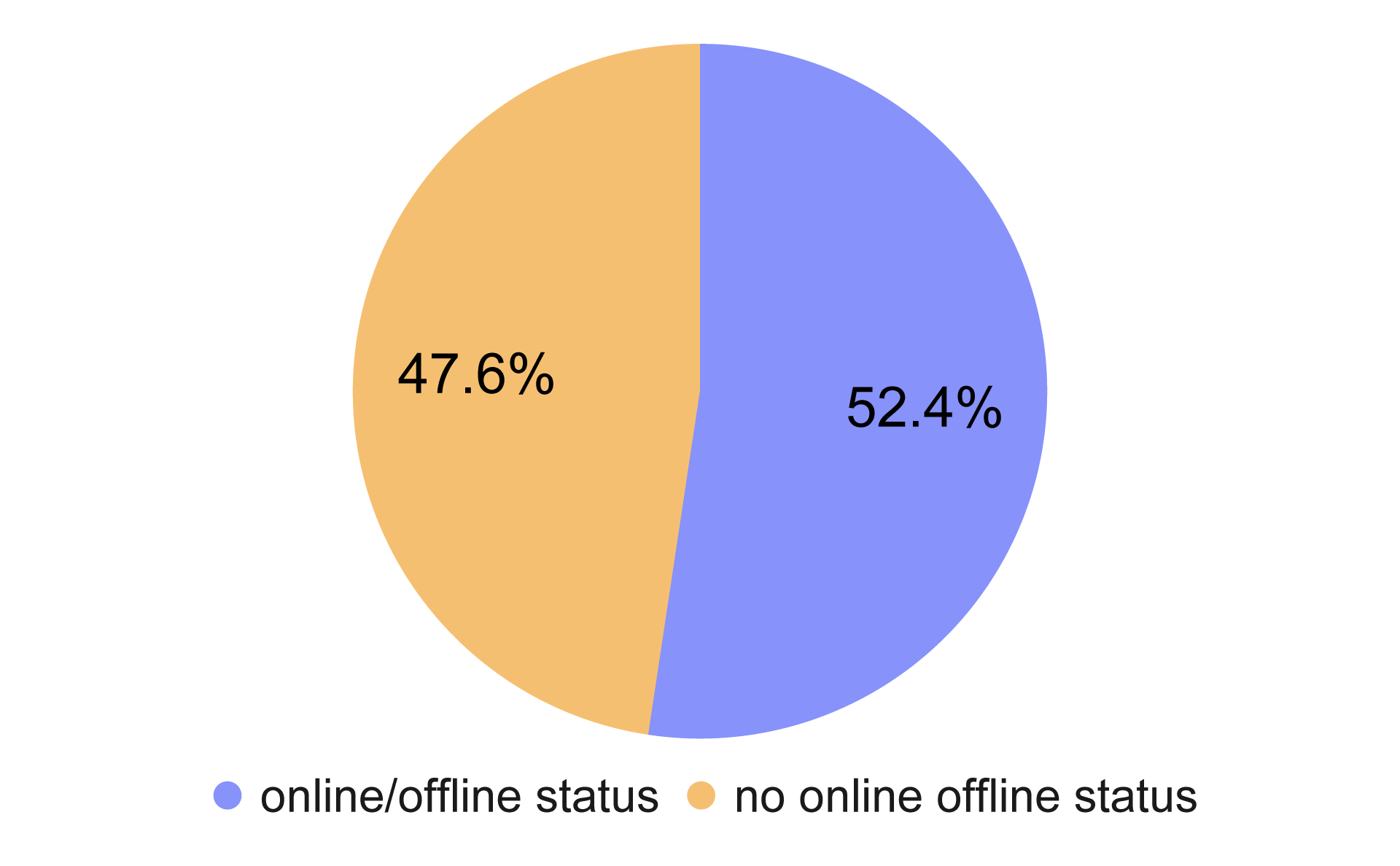
Live chats that display online/offline status
However, an offline status can deter customers from initiating a chat. To address this, some businesses incorporate chatbots into their live chat systems. Chatbots can handle a variety of common customer questions, providing support even when live agents are unavailable. If a question exceeds the chatbot’s capabilities, it can redirect the customer to a human agent, or, if no agents are available, offer a contact form. Chatbots today often use AI to improve response quality and adapt to customer needs.
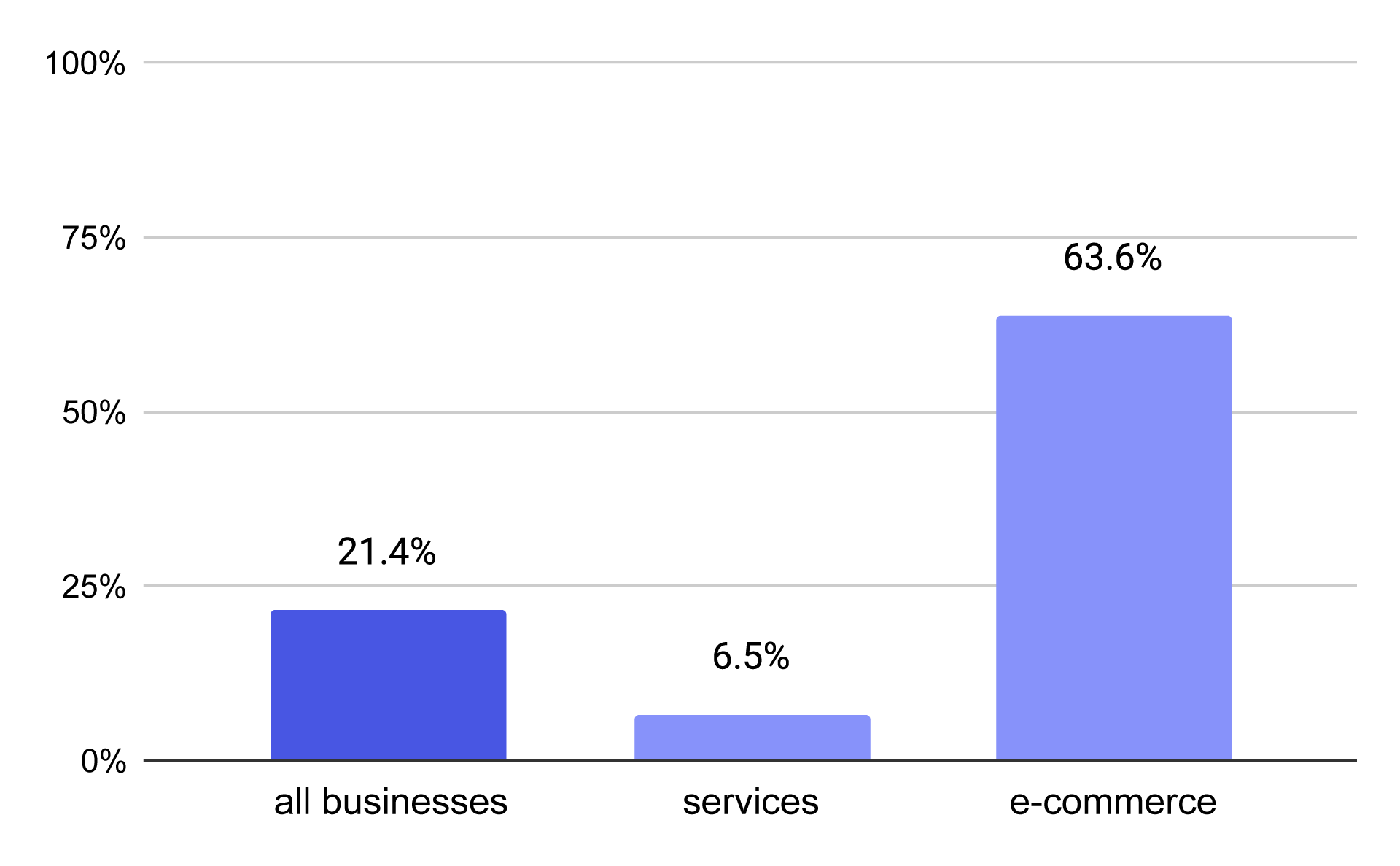
Percentage of live chats that also use chatbots
Among the businesses we reviewed that offered live chat, an average of 21.4% also had an integrated chatbot. Interestingly, there was a significant disparity between service businesses and online stores: 63.6% of live chats in e-commerce stores included chatbot integration, compared to only 6.5% of live chats in service industries.
What are popular website chat solutions?
Which chat solutions are businesses choosing for their websites? Our study revealed that, in terms of frequency, the providers fell into the following categories:
-
CMS & web builders: 53.3%
-
live chat systems: 25.1%
-
automation solutions: 8.2%
-
undetected providers: 6.7%
-
industry-specific solutions: 4.6%
-
social media communicators: 2.1%
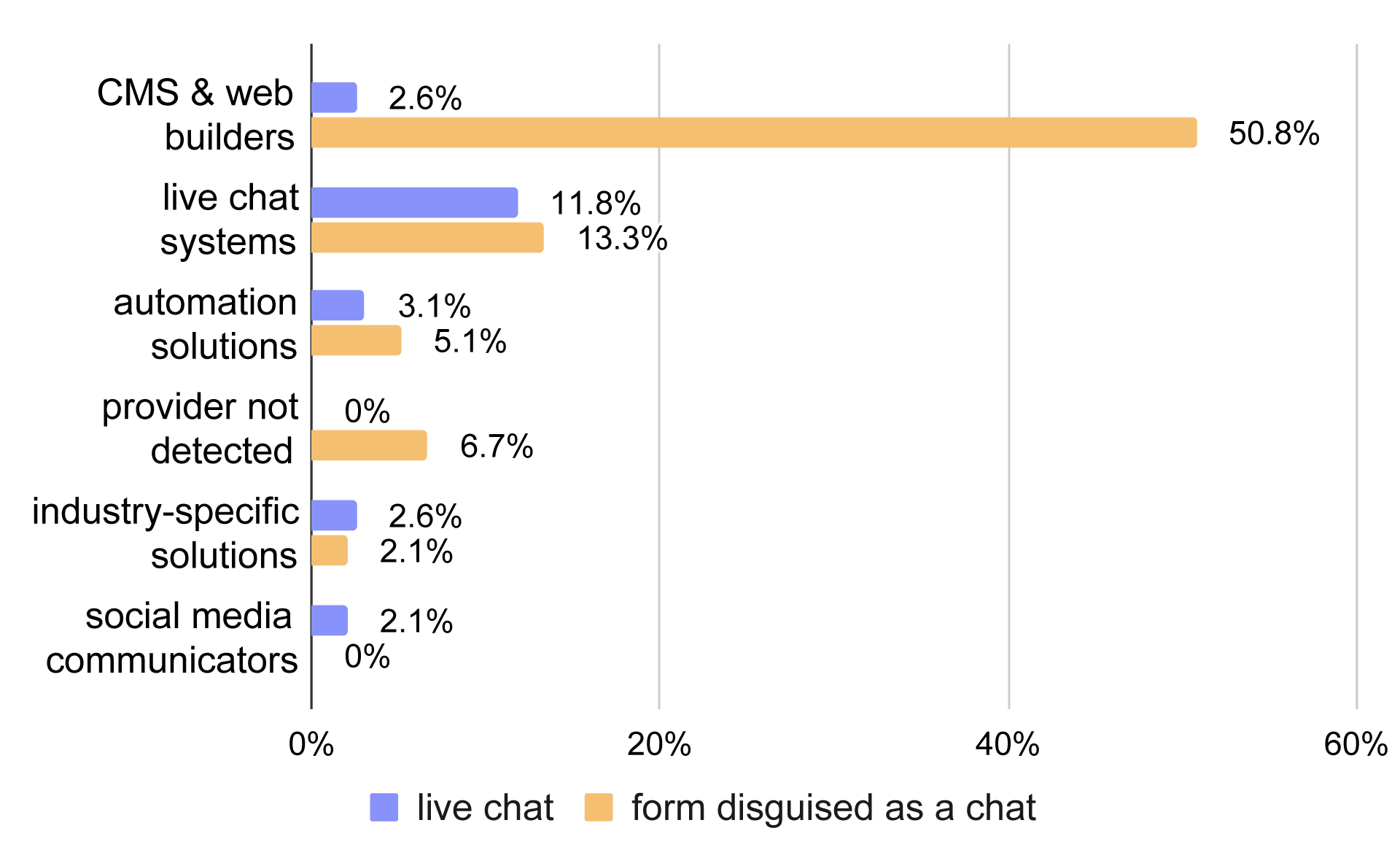
Chat widget providers by type
For businesses offering actual live chat, live chat system providers were the most common choice. In such cases, the decision to offer live chat likely came first, followed by selecting a solution specifically designed for this purpose. Similarly, automation solutions and industry-specific providers typically require integration with a CMS or direct website embedding, indicating a more deliberate approach to implementation.
An interesting finding came from sites using CMS or website builders, where most chats were actually disguised forms. It’s possible that business owners, seeing a chat widget as part of their chosen CMS or web builder’s package, enabled it without much consideration. Given the frequent negative perception of disguised chat forms among users, this choice may not always be optimal.
A more effective solution could be a CMS offering a widget that combines live chat with an AI-powered chatbot, capable of assisting customers whenever human agents are unavailable. With such a setup, business owners can confidently display an online chat status around the clock, knowing customers will receive consistent, high-quality support.
Summary
What can we conclude about running an online business based on our chat study? Here are some practical recommendations:
-
Stand Out: Chats are rarely used, providing a unique opportunity to differentiate yourself from competitors.
-
Think Twice About Disguised Forms: If considering forms disguised as chats, carefully weigh the potential for customer frustration, as it can negatively impact brand perception.
-
Upgrade with AI: Traditional live chat can be greatly enhanced or even replaced by AI-driven chatbots, offering efficient, cost-effective support solutions.
Implementing a well-designed chat strategy can enhance customer experience and engagement. For businesses aiming to offer dependable, accessible support, an AI-enabled live chat system offers a balanced, robust solution.
The data and statistics presented in this blog post come from a research study conducted by IKOL between 2023 and 2024. To learn more about IKOL research methodology and explore other findings, visit: ikol.com/research