To Price or Not to Price: Prices on a Service Business Website
You walk into a hair salon, excited for a makeover. The stylist greets you warmly, and you instantly feel at ease. As you discuss different treatments — a new haircut, highlights, or deep conditioning — you notice the stylist doesn’t mention any prices. When you ask, the stylist gives non-committal answers, assuring you that it depends on many factors but promising you’ll be satisfied.
You start to feel uneasy. Without knowing the prices, how can you decide which services to choose? You don’t want to commit to something you can’t afford or be surprised by a hefty bill at the end. You begin to question whether you’re making the right choice by staying.
Importance of pricing information on websites
The same scenario happens on websites. People may assume that no prices on the website means services are expensive. If you don’t mention anything about pricing, are you sure it’s a good strategy for your business? Are you sure people aren’t thinking you’re out of their price range and that they should find someone else?
The decision to list prices on your business website isn't one-size-fits-all. But one thing's for sure: being upfront about your costs is important. Providing a price range, starting price, or explanation of what affects the price can help prevent misconceptions and ensure you don't scare off potential clients.
The pricing puzzle
We analyzed over 2,000 businesses from 84 industries across the United States to see which ones are most likely to put prices on their websites. The results show that the service industry is vast, and pricing practices vary widely. But why is that? Let’s explore pricing practices and see how this situation looks in numbers.
Service businesses
Service businesses are those that provide intangible products, rather than physical goods. Instead of selling items, they offer expertise, labor, or other forms of assistance to customers.
- About one-fourth of service businesses in the US (26%) provide pricing on their websites.
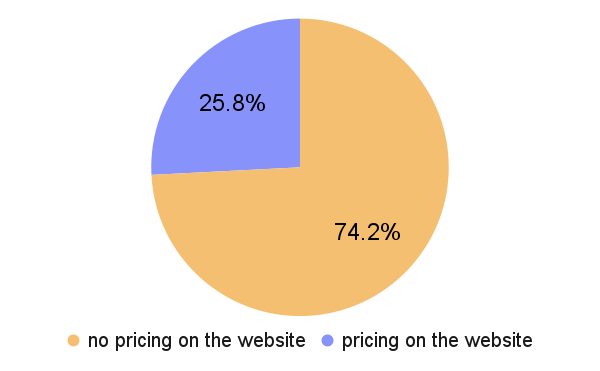
Percentage of service businesses in the US providing pricing online
So, why are so many service businesses keeping their customers in the dark about costs?
To better understand how pricing works in the service industry, let's examine three different sectors: yoga classes, hairdressing, and handyman services. By comparing these industries, we can see how pricing practices vary across different types of services.
Yoga classes
- 95% of yoga studios display pricing on their websites.
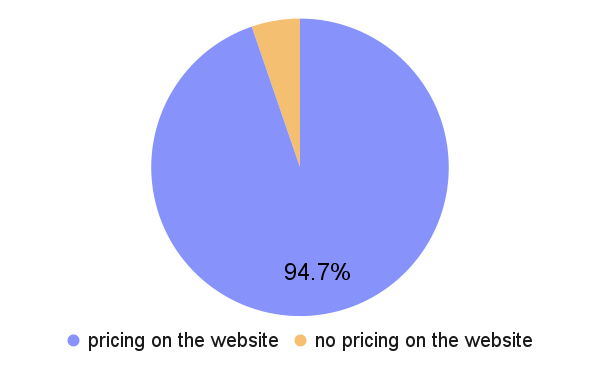
Percentage of yoga studios in the US providing pricing online
Yoga studios are one of the business types leading the way in price transparency. Pricing on their websites typically includes the cost and duration of each class. Many studios go even further, listing price details for memberships, drop-in rates, and introductory deals.
Hairdressing services
- More than half of hairdressers (60%) share pricing information on their websites.
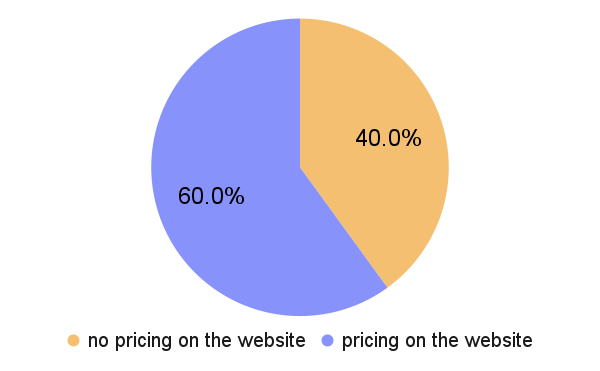
Percentage of hair salons in the US providing pricing online
Most hair salons list exact prices for basic services, but also provide price ranges for more complex treatments. Hairdressers may also offer different prices based on the stylist's experience level.
Handyman services
- Only 2% of handymen are upfront about their rates online.
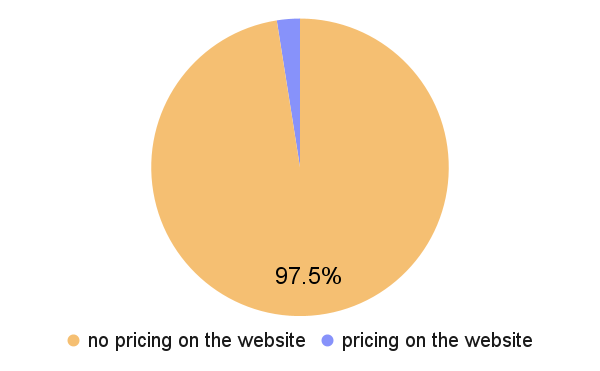
Percentage of handymen in the US providing pricing online
This is the most common scenario: most handyman websites simply don't mention prices at all. Just a few websites provide broad price ranges for common services like plumbing repairs or carpentry, or inform customers about their hourly rates.
Driving forces behind pricing transparency
Why are some service prices crystal clear while others are a total mystery? It all boils down to how complex and customized the service is. The ease of pricing services depends on several factors, such as standardized time requirements and consistent resource use, which make some jobs straightforward to price. Think of haircuts or car washes. More complex projects like home remodels or road assistance require a case-by-case evaluation. Let's dig deeper and see how these differences play out in the real world.
Businesses that provide pricing
- Service providers that offer simpler, less customized services are usually clearer and more transparent about pricing.
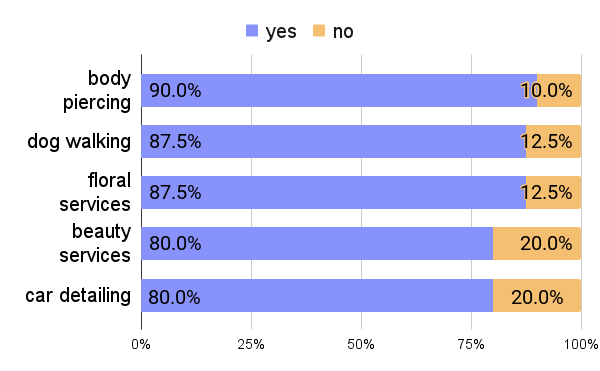
Percentage of businesses displaying prices online, by industry
These industries share a common thread: standardized services. Whether it’s a haircut, a car wash, a bouquet, a piercing, or a dog walk, these services often have clear definitions and can be priced accordingly.
Body piercing shops are masters of clear pricing. Most shops list prices for different piercings and jewelry right upfront. Standardized procedures and the use of consistent materials make it easy to set clear prices. The cost of tools, aftercare products, and jewelry is predictable, contributing to transparent pricing.
Dog walkers keep it simple too. Hourly rates or package deals are common, making it easy to know what you’ll pay. Services are straightforward, with clear time commitments and tasks. Consistent routines and predictable costs for transportation and supplies help maintain transparent pricing.
Beauty salons know how to keep it simple. Most services can be timed or measured by product use, making pricing simple. The consistent supplies and labor also help keep prices clear. Customers expect this transparency, so salons make sure to display their rates.
Car detailing is another clear-cut industry. You know exactly what you’re paying for – a basic wash, a full interior clean, or the whole shebang. No surprises there. Services are clearly defined, with standard packages that outline exactly what’s included. The use of consistent materials and techniques ensures predictable costs.
Florists are also pretty upfront. You can usually find the price of a dozen roses or a simple bouquet right on their website or in the shop. Standardized arrangements and common floral products make pricing easy to display and understand. The consistent costs of flowers and materials help keep prices predictable. Additionally, florists often have to stay competitive, encouraging them to be clear about their rates.
These industries get it. Clear pricing builds trust and makes customers happy. It’s a win-win. Now, let’s look at some industries where pricing isn’t as clear-cut.
Industries that don’t offer straightforward pricing
- Complex services often lack clear pricing on websites.
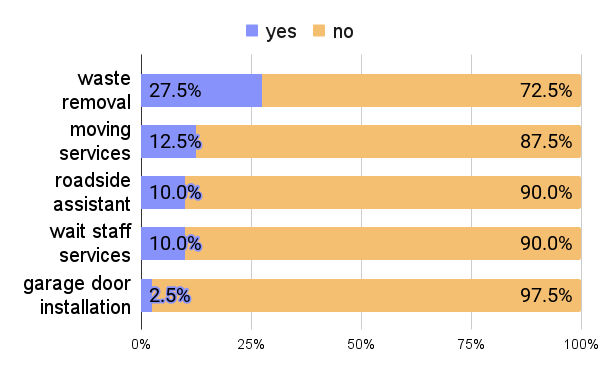
Percentage of businesses displaying prices online, by industry
It's not always about hiding the numbers. Mostly, it's just impossible to know the final price upfront.
Junk removal is highly unpredictable. Whether it’s a few boxes or a large accumulation of items, the volume and type of junk can vary greatly, making it difficult to estimate costs upfront. Factors like the amount of labor required, the truck space needed, and the complexity of sorting and handling different types of waste all influence the final price.
Moving, for example, is another pricing puzzle. You never know how much stuff you've got until the movers show up. The pricing can vary based on factors like the total volume of items, the distance traveled, and additional fees for stairs, elevators, or bulky items. Each move is unique, making it hard to provide a clear-cut price in advance.
Waitstaff for private events can be challenging to price. The cost depends on various factors, such as the number of guests, the length of time they’re needed, and the complexity of the meals being served. Additional elements like special requests, extra hours, or specific service requirements can further influence the final price.
Roadside assistance is a real gamble. You never know what you're going to get when you break down. Is it a simple flat tire or a full-blown engine failure? Location matters too. If you're stuck in the middle of nowhere, expect to pay more. Throw in unexpected costs like towing long distances or needing special tools, and it's no wonder roadside assistance prices are so hard to pin down.
Garage door installation is another tricky one. Every home is different, and you never know what surprises you'll find until the old door comes off. Factors like the need for a new motor, additional reinforcement, or unexpected structural issues can significantly affect the final cost. Variations in door sizes, mounting requirements, and existing hardware also add to the unpredictability.
These industries share a common challenge: unpredictability. Every job is different, with unexpected twists and turns, and services can vary greatly from one job to the next. Factors like the nature of the work, the customer’s specific needs, and unforeseen circumstances make it nearly impossible to provide a fixed price upfront. This lack of standardization is the main reason why transparent pricing can be so difficult to offer.
Summary
Knowing exactly what you're paying for is crucial because consumers value clarity and convenience. It makes customers happy and builds trust. When businesses are upfront about their costs, it's a win-win. However, for businesses offering more complex services that can’t be priced upfront, there are still ways to be transparent. Providing a ballpark figure, offering free estimates, or clearly explaining how the price is determined can go a long way in building trust.

As the digital world continues to evolve, we might see more businesses adopting transparent pricing models. We believe that the decision to display your prices or maintain as much pricing transparency as possible is a strategic choice for your business. Why?
- Customers love knowing what they're paying.
- Clear pricing builds trust.
- It saves time for both you and the customer.
- You'll avoid misunderstandings and surprises.
- It can lead to repeat business and referrals.
The data and statistics presented in this blog post come from a research study conducted by IKOL between 2023 and 2024. To learn more about IKOL research methodology and explore other findings, visit: ikol.com/research