Portfolios And Personal Websites: Trends Across Different Creative Industries

Let’s face it - a strong online presence is a game-changer, and online portfolios and personal websites are one of the best ways to show off your skills, creativity, and professionalism. For individuals in creative industries a well-designed website can make all the difference between landing your next big gig and getting lost in the crowd. But with so many different industries and styles out there, it can be hard to figure out what works best for your own site. Therefore, it's important to understand the trends and patterns that dominate across different industries.
We explored the most common website features of portfolio websites, analyzed their design trends, and highlighted differences and similarities across various creative sectors. We examined over 100 websites, including the personal ones belonging to individuals whose professions are less common or interdisciplinary, and portfolios relating to specific industries‒actors, models, visual artists, marketers, researchers and writers. With the conducted portfolio analysis we identified the trends and features that stand out, what works, and how different industries approach online self-presentation. Here’s what we found.
What are portfolios and personal websites?
A portfolio website is your personal online space to show off your work, skills, and achievements, as well as share your contact information. The primary purpose is to highlight your work in a clean and accessible manner, giving potential clients, employers, or collaborators a chance to see what you’re all about.
For actors, models, visual artists, and others in creative industries, the portfolio website acts as both a digital résumé and a gallery of their work. It’s a way to stand out in a crowded field.
Personal websites are a bit broader. They’re more about presenting individual’s oneself to the world. Unlike a portfolio website, which is specifically designed to showcase a person’s accomplishments, a personal website can encompass a broader range of content. From blog posts and bios, to personal interests and even personal mission statements. They’re like a curated version of one’s personality and interests.
What makes a portfolio? Website content & elements
When we looked at all the websites, some features popped up again and again. Here are the ones you’re likely to see, based on our analysis:
Gallery photos
Gallery photos are nearly everywhere. A whopping 88.3% of the sites we checked out had them. Visual presentation is central to creative industries, and this is reflected in the high usage of image galleries to showcase work.
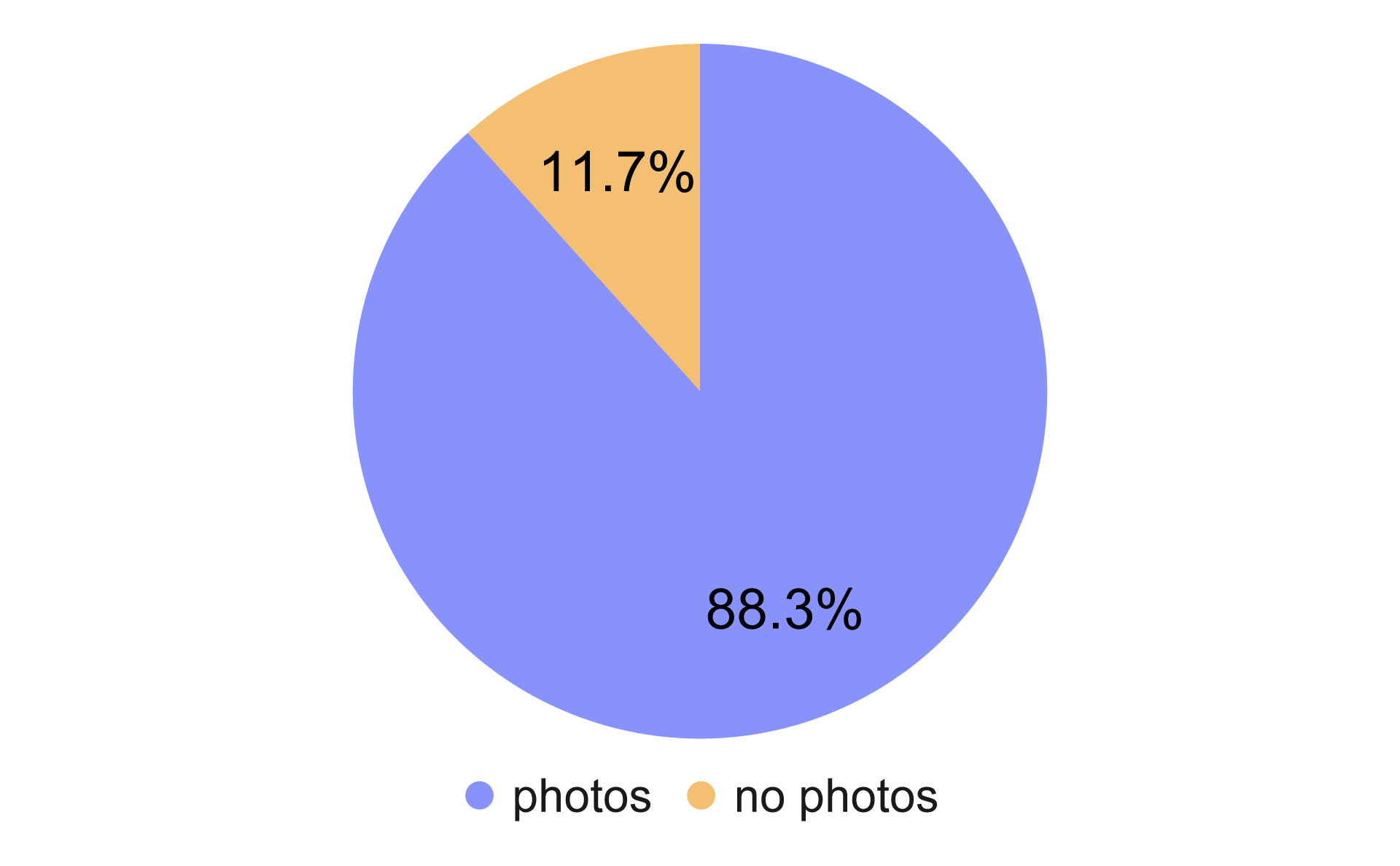
Gallery photos on portfolio websites
For actors and models, high-quality photos are a must because they serve as a primary tool for showcasing their appearance and versatility. For visual artists, galleries show off the latest artwork in a visually appealing, professional manner. For marketers, it’s all about showcasing their campaigns or products, while writers may display book covers, snippets of their written work, or photos related to the stories shaped by their imagination.
However, personal websites usually don't focus on photos as much since they’re more about branding and content.
Videos
Videos are on about 32.5% of the websites analyzed. While videos are not as widely used as gallery photos, they’re still especially useful in some industries. Actors and models, for instance, frequently include showreels or video introductions, allowing them to demonstrate their on-screen presence or modeling skills. Similarly, marketers may feature videos showcasing their campaigns or ads.
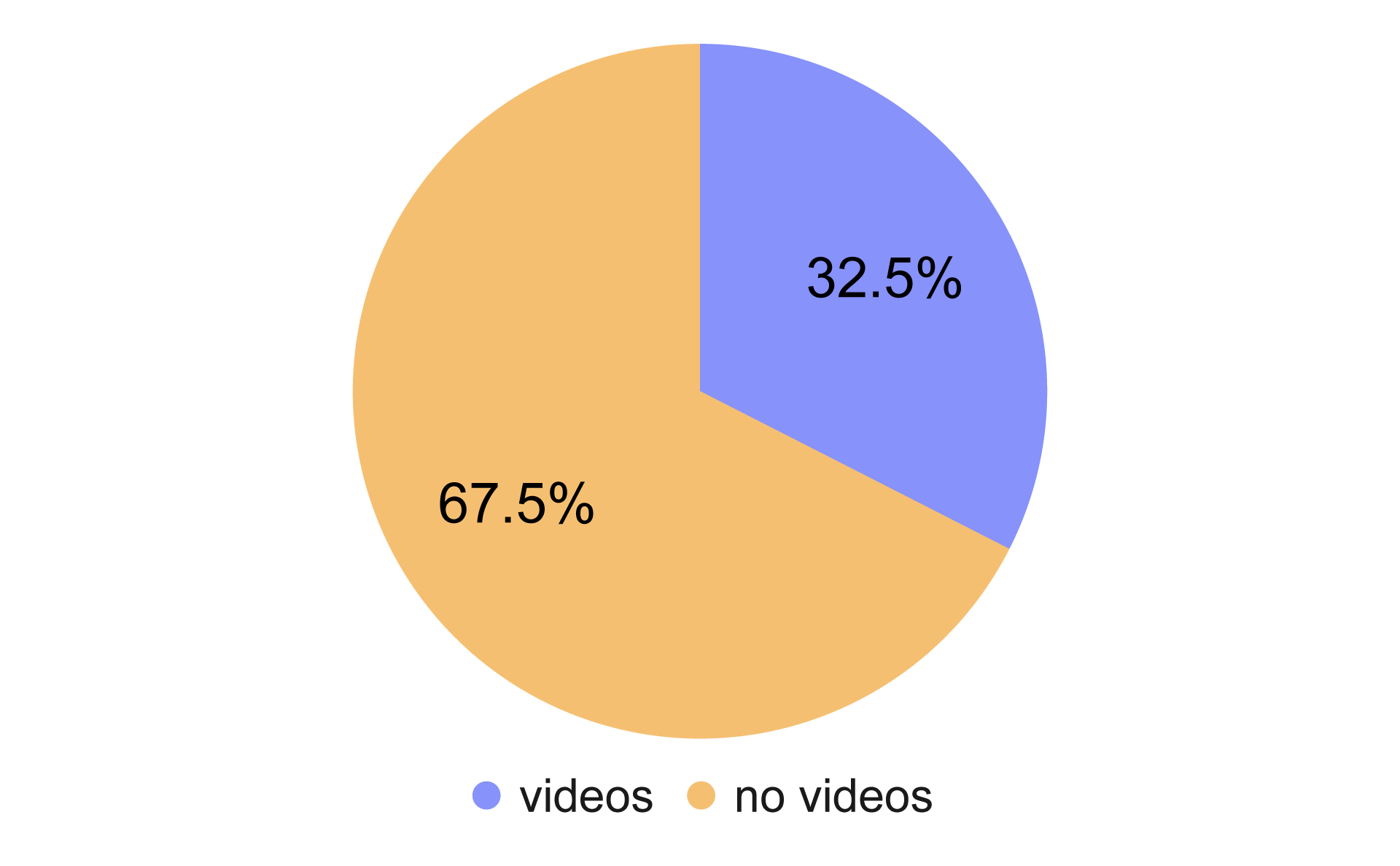
Videos on portfolio websites
That said, the trend is not universal. Visual artists have static images as their go-to and tend to avoid videos in favor of focusing purely on their artwork. Writers are the least likely to include videos, as their work is typically better shown through written content rather than visual media.
Downloadable CV or portfolio
A downloadable CV or portfolio is a relatively rare feature, present in only 14.2% of the analyzed websites. Interestingly, none of the visual artists included downloadable portfolios, as they prefer to showcase their work directly on the website rather than offering it as a separate downloadable file.
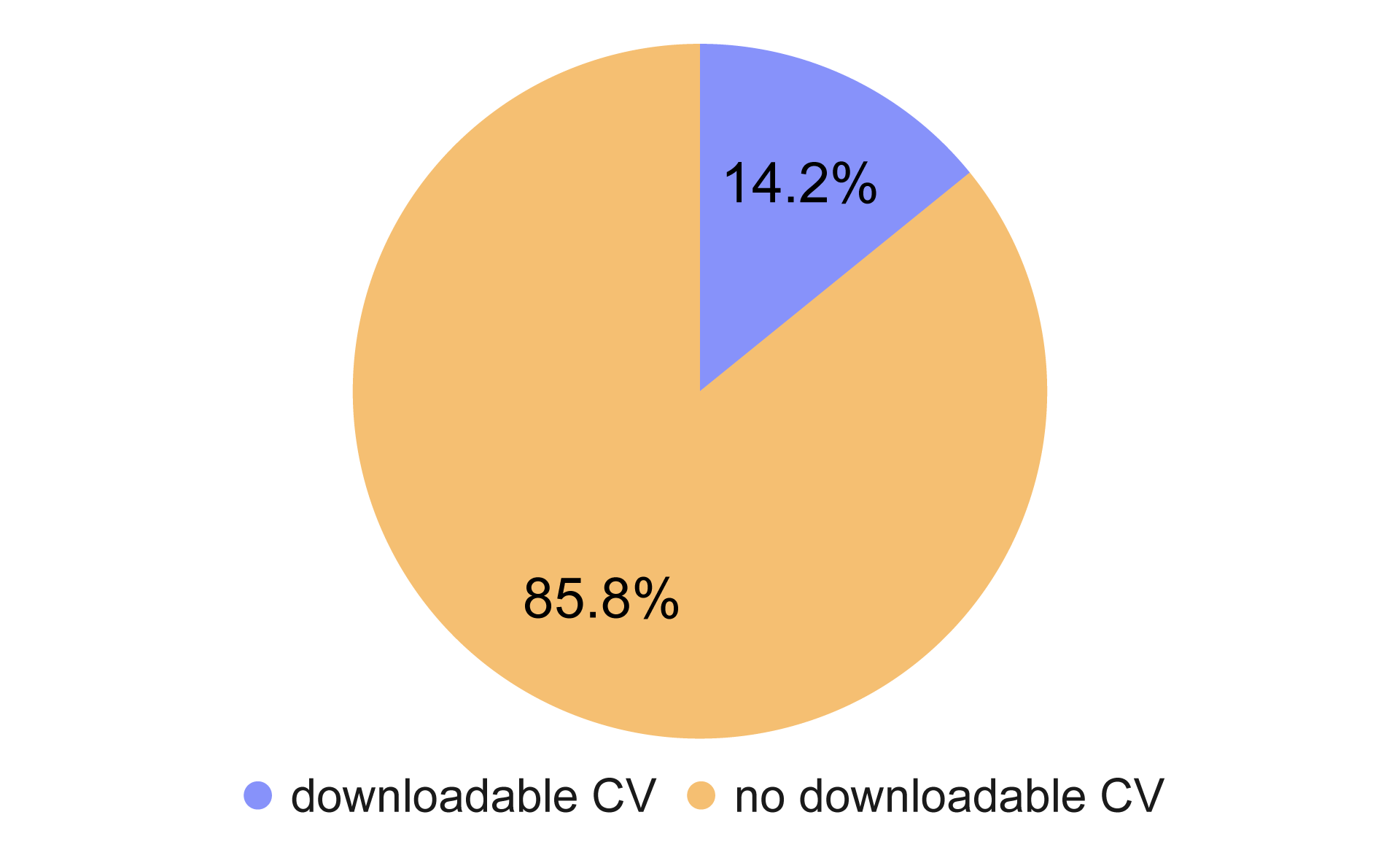
Downloadable CV on portfolio websites
This feature is more common among writers, marketers, and personal websites, where visitors may be interested in downloading a professional résumé or work samples for further review.
Blog
Blogs appear on 18.3% of websites included in our portfolio analysis. They’re usually seen on personal websites and among marketers, where they help with SEO (search engine optimization) and keep the audience engaged. Personal websites, in particular, often include blogs to offer insights into the person’s life, thoughts, and work. Marketers use blogs to share case studies, trends, or updates, giving a glimpse into their expertise.
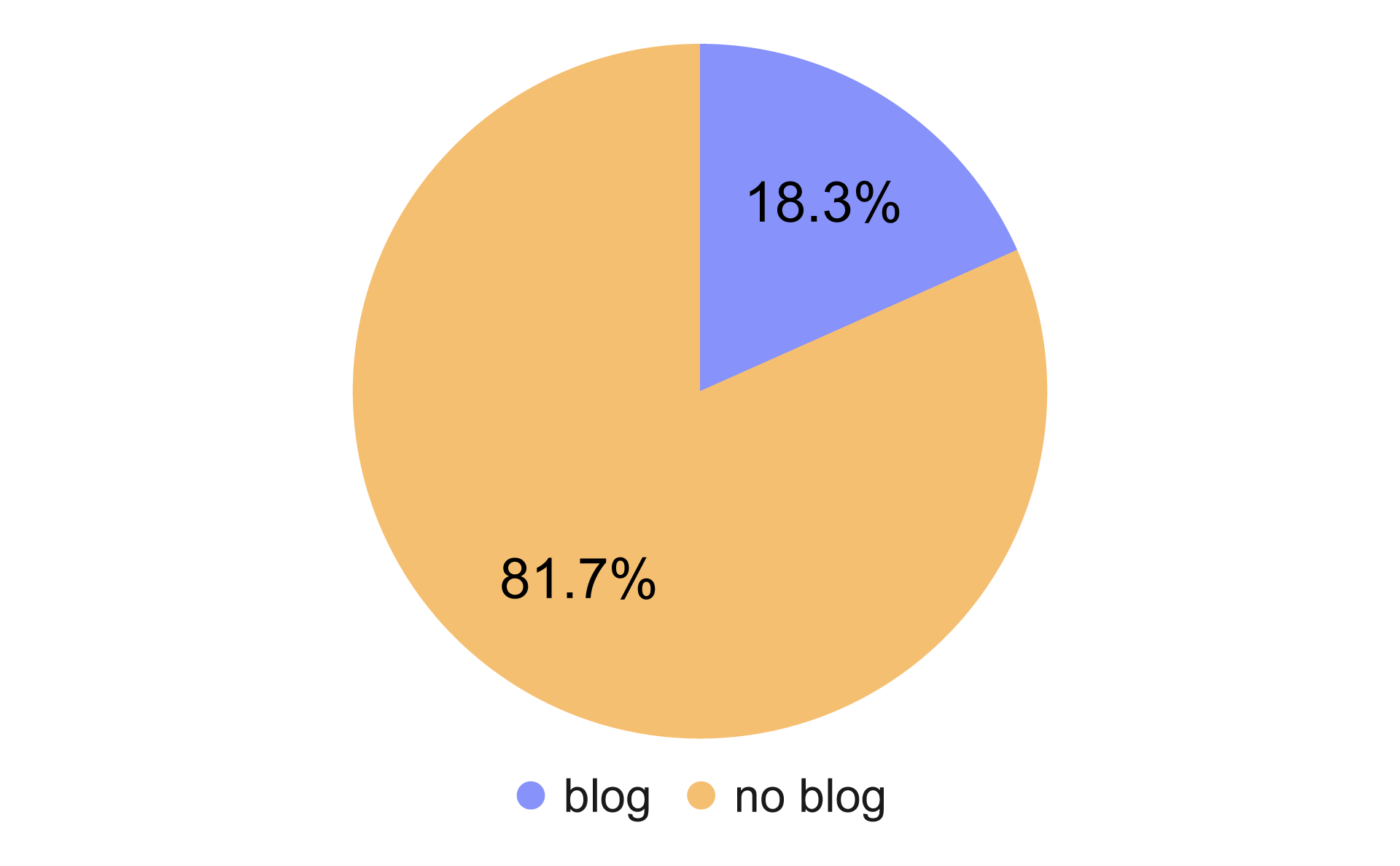
Blogs on portfolio websites
However, blogs are rarely, if ever, included on actor, model, or researcher websites, likely due to the nature of their work, which is typically more focused on visual or academic content rather than written posts.
Testimonials
Testimonials are another element that can help build trust, but they only show up on 15.0% of the websites we looked at. Notably, these were missing on model and visual artist websites. This suggests that both models and artists rely on the strength of their visuals alone, without needing external validation through feedback or endorsements.
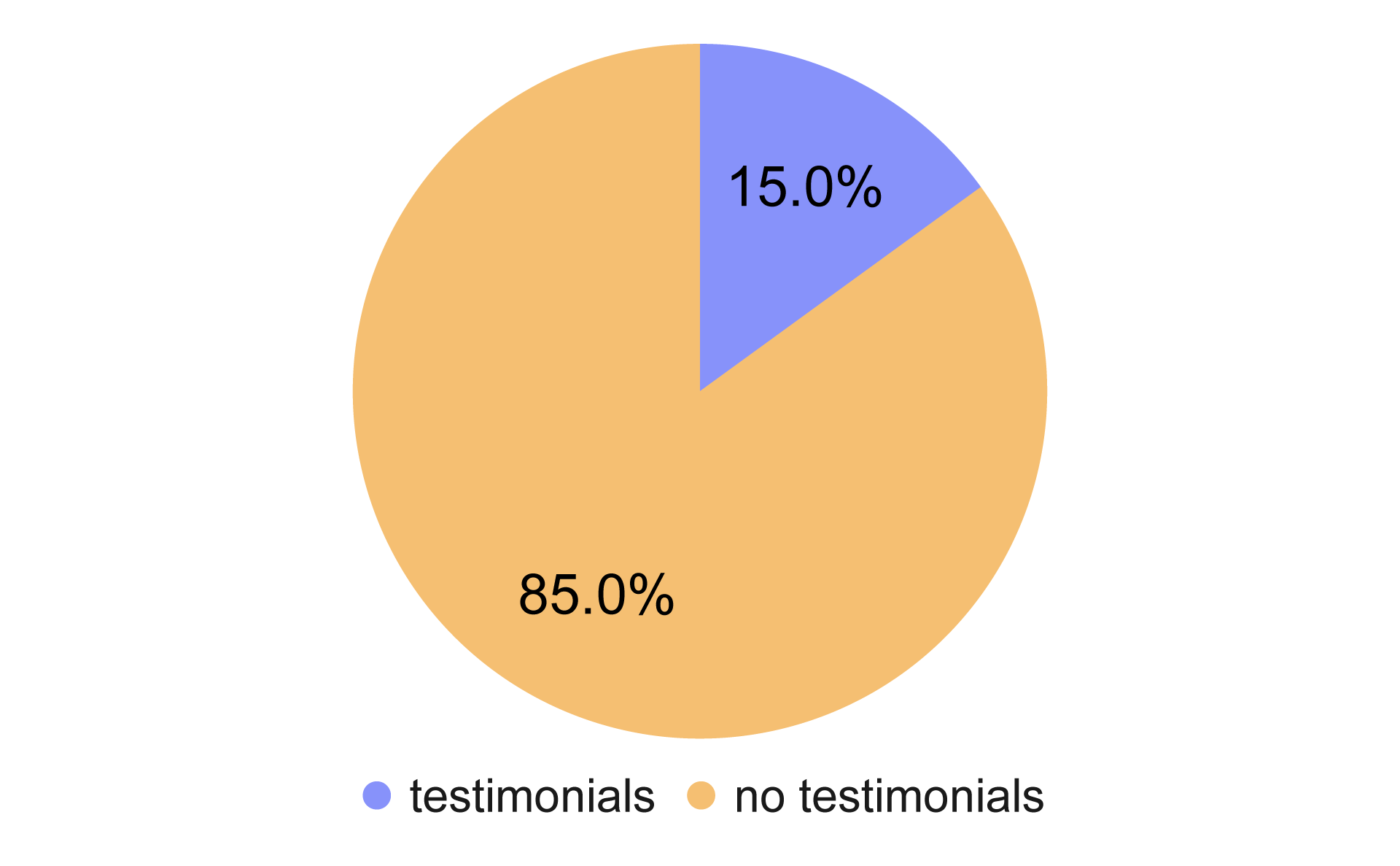
Testimonials on portfolio websites
On the other hand, marketers and writers may include testimonials to build trust with potential clients or employers by highlighting their past successes and happy clients.
Social media integration
A highly popular feature, social media links are present on 77.5% of portfolio websites. This makes sense, especially since for certain fields social media is just as important as the website itself (if not more). It’s a great way to connect one’s portfolio with their broader online presence, whether it's on Instagram, Facebook, Twitter, LinkedIn, or other platforms. It’s particularly important for visual artists, marketers, and models, where social media is often a key channel for showcasing work and keeping the followers and fans engaged.
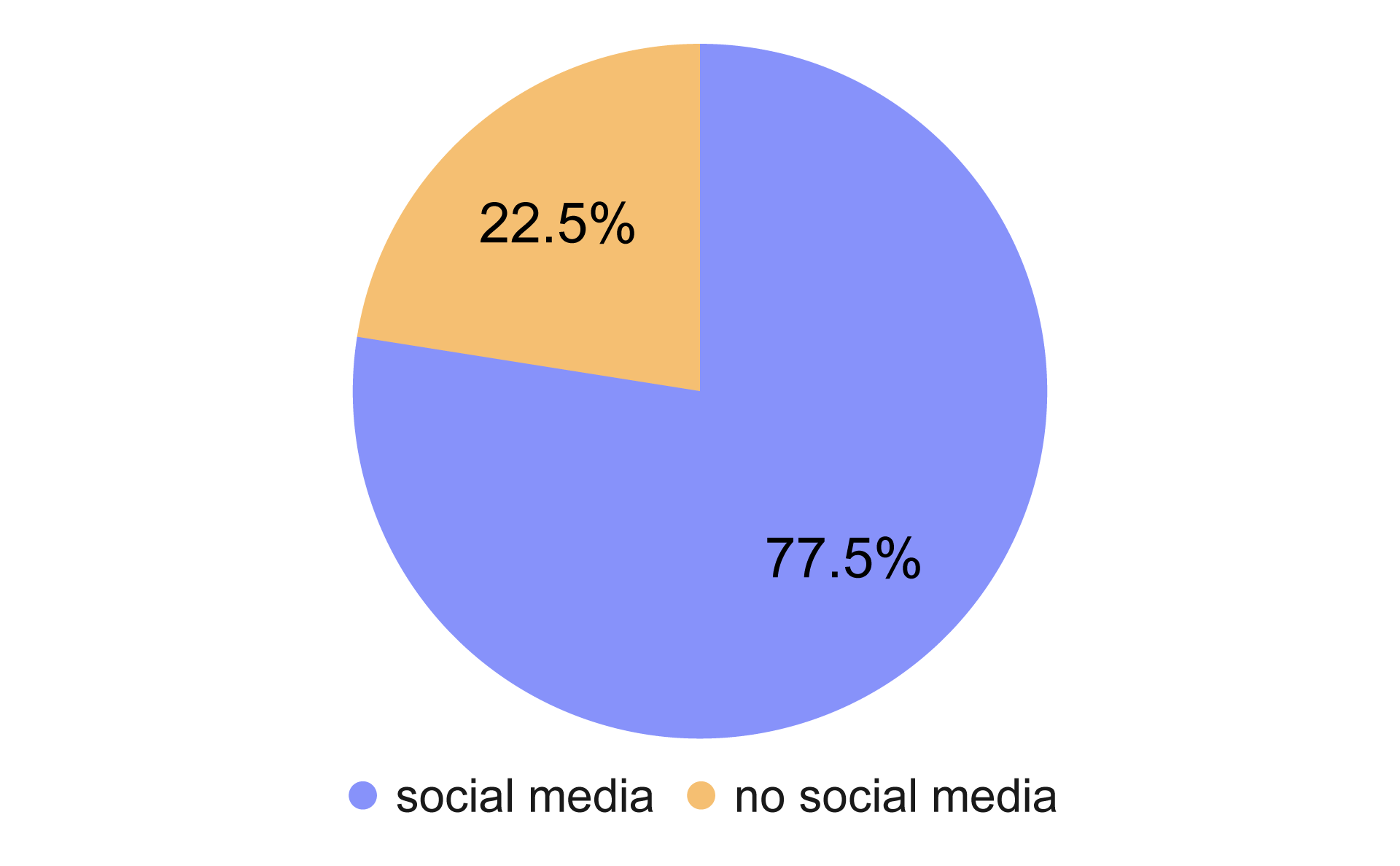
Social media on portfolio websites
However, visual artists tend to have slightly lower rates of social media integration compared to other industries, which may reflect their preference for showcasing work directly on the website rather than through external platforms.
Newsletter form
Only 15.0% of the websites we looked at had a newsletter sign-up form. They’re still fairly common on personal websites and among writers.
For writers, newsletters are a way to maintain engagement with an audience and update them on new projects, publications, or events. Similarly, personal websites may include newsletters as a way to keep their followers in the loop.
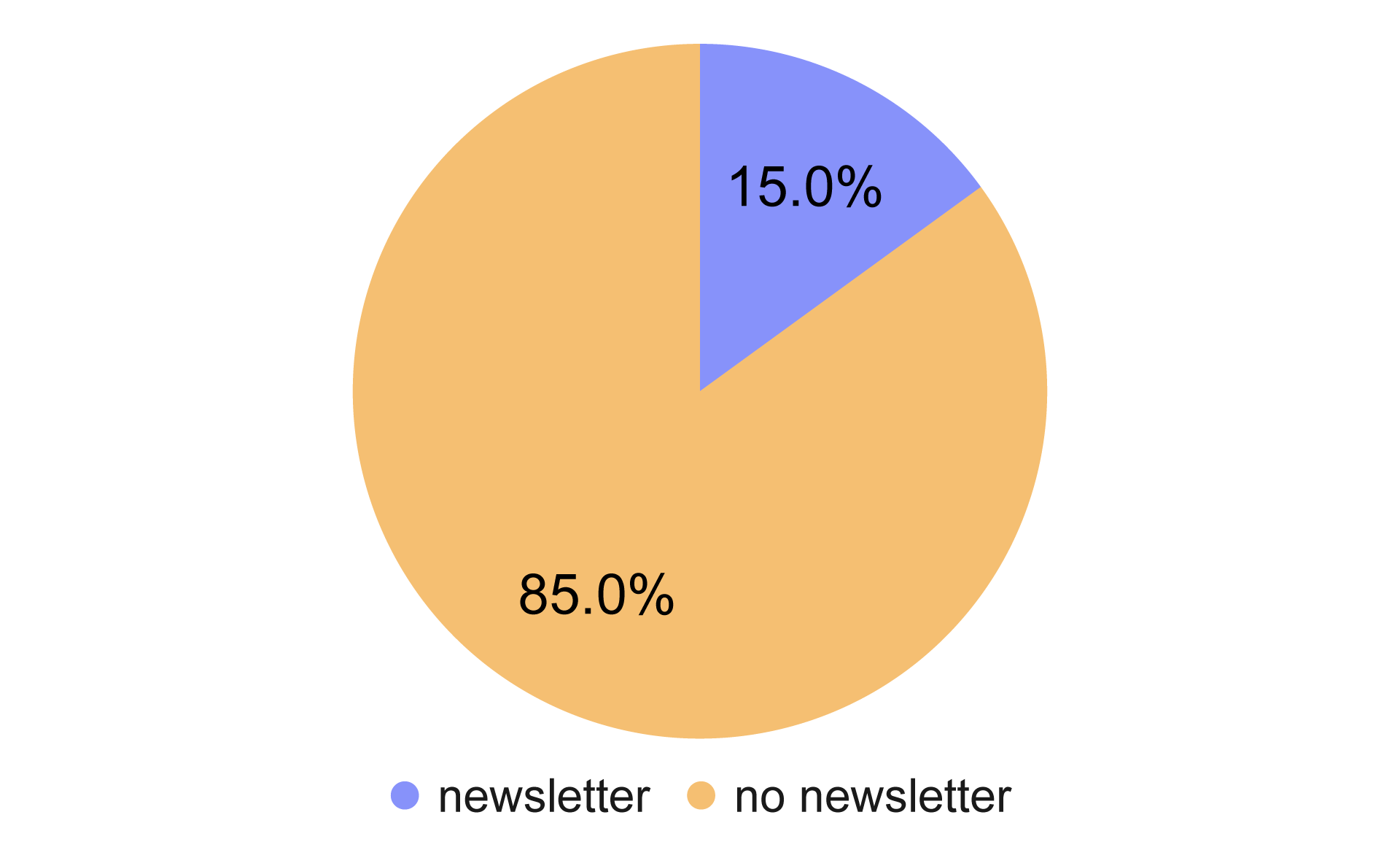
Newsletters on portfolio websites
What contact methods should you include on your website?
When it comes to contact info, our portfolio analysis revealed several trends:
-
Email: Present on
69.1%of portfolio websites, email is the most common way to make contact. This is higher than the general business world, where email info is present on63.2%of websites. -
Contact Form:
50.8%of websites included a contact form, which is lower than the67.1%seen across all businesses. It’s a good option, but fewer creatives seem to favor forms over direct communication. -
Phone: Surprisingly, phone numbers appear on only
15.8%of portfolio websites, a stark contrast to the general business world, where90.1%of websites include phone contact. Many creatives seem to prefer online or email communication, especially since phone calls are less conducive to showcasing work. -
Chat Widget: Those appeared on only
1.7%of portfolio websites, compared to8.6%in the broader business sector. While some creatives might consider chats useful for quick communication, many prefer other methods that fit better with the more personal, visual nature of creative portfolios.
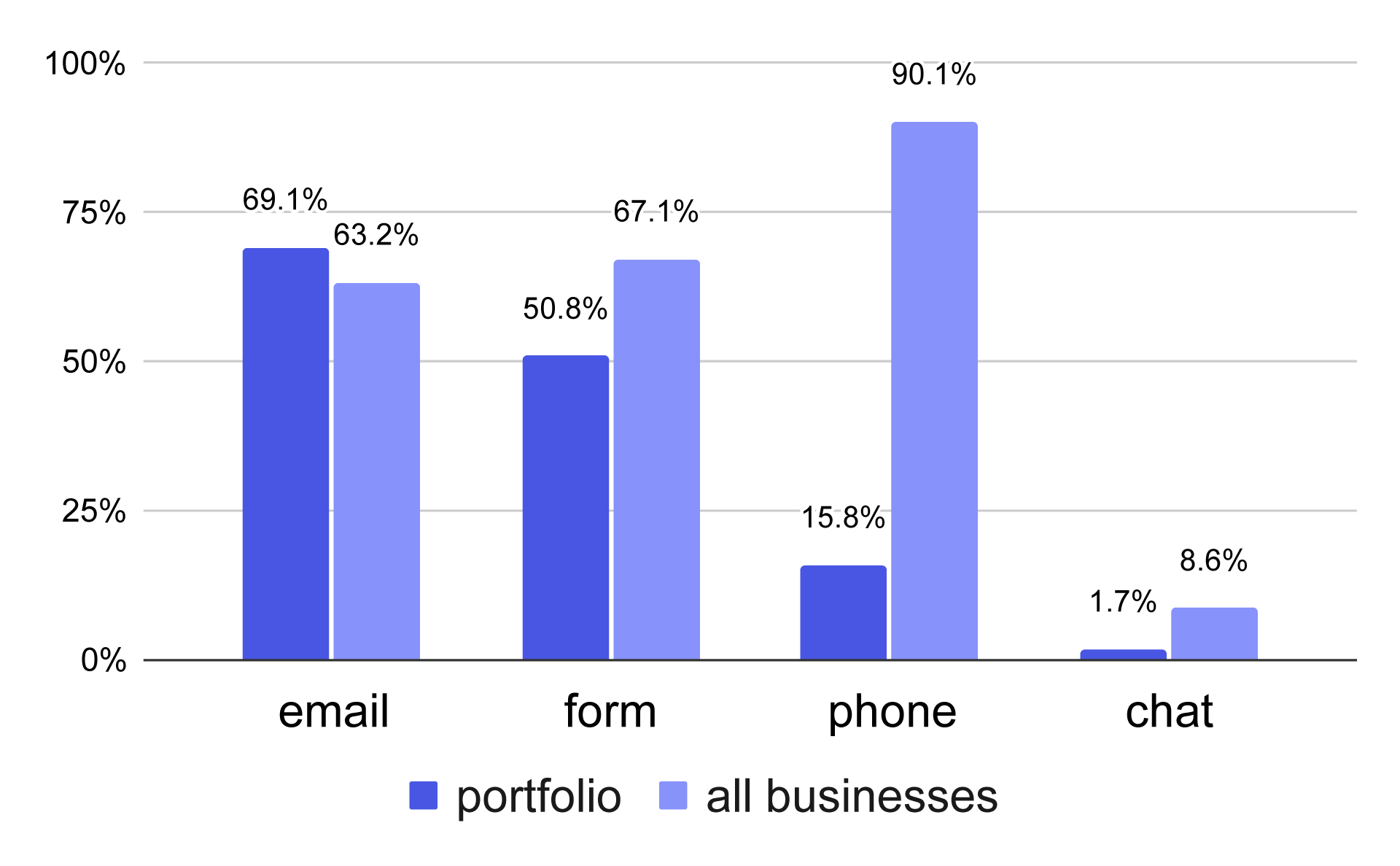
Contact methods on portfolio websites vs. all businesses
What color palette is best for online portfolios?
In terms of color choices, white is the most dominant color across all analyzed websites, appearing on 46.7% of them. White gives a clean, minimalist look that makes content stand out. It’s particularly popular among visual artists, marketers, and models, who want the focus to remain on their work.
Black (15.8%) and gray (10.0%) are also popular choices. These colors often convey sophistication, elegance, and professionalism. While black is commonly used in actors' websites, it’s also a popular choice among researchers, adding a professional and sleek look to the design.
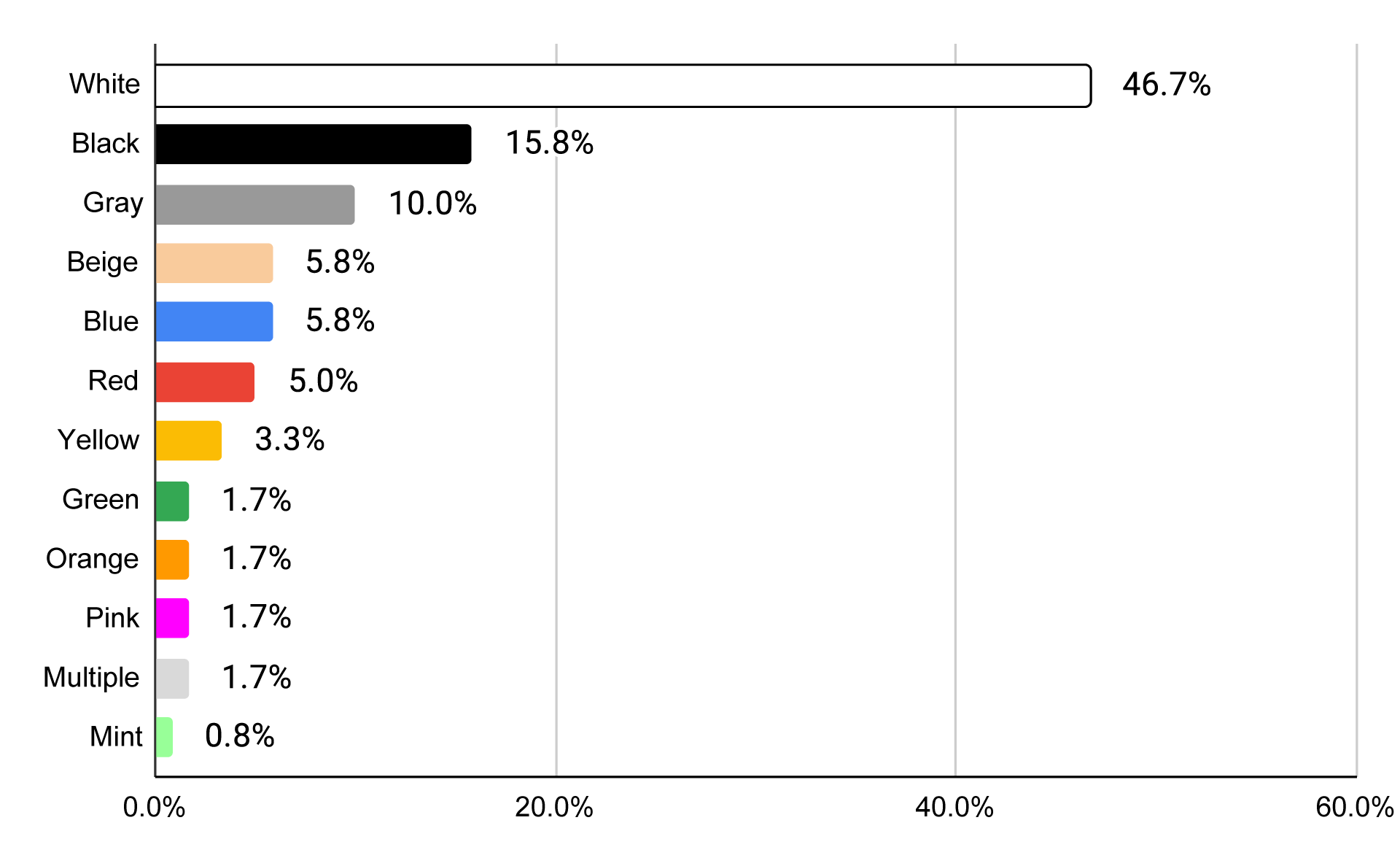
Dominant colors on portfolio websites by popularity
The color trends vary slightly between industries:
-
Visual Artists, Marketers, and Models: White is the dominant color choice for all three of these industries. For visual artists, the clean, neutral background allows their work to take center stage without distraction. Marketers opt for white to create a sleek, modern, and professional look that highlights their campaigns or products. Similarly, models prefer white to showcase their photos against a minimalist backdrop, ensuring the focus remains on their images and not the website design.
-
Writers: Almost half of writers choose white as the dominant color, creating a minimalist and clean aesthetic. The other half, however, shows a very high diversity in color selection, reflecting the personal and varied nature of their work.
-
Researchers: Grayscale colors are the most popular among researchers. However, these may also be combined with accents in vibrant shades, such as orange or mint, to add visual interest and highlight key content while maintaining a professional, academic feel.
-
Actors: While still favoring white, actors often use black or gray as dominant colors, reflecting a desire for a more dramatic or sophisticated aesthetic.
What unique features can be considered for portfolio?
To make your portfolio website stand out, consider incorporating features that go beyond the basics. One option is a booking tool, which allows potential clients to schedule meetings or consultations directly through your site.
Another feature to consider is an e-commerce integration, allowing you to sell your work directly from your site. For visual artists or writers, this could mean selling prints, books, or digital downloads.
Lastly, adding a project management tool or a collaboration platform could be valuable for professionals who often work with clients on ongoing projects. These features can help clients track progress and communicate more efficiently.
Conclusion
During our portfolio analysis we noticed that website trends vary between different industries. However, a few things stand out:
-
Photo galleries are crucial: they were featured in 88.3% of analyzed portfolio websites, showing their importance for showcasing work.
-
Video content is growing: 32.5% of portfolios include videos, especially beneficial for actors and models.
-
Social media integration shouldn’t be underestimated: 77.5% of websites link to social media, connecting portfolios to wider online platforms.
-
Color palettes matter: White, black, and gray dominate portfolio designs, with slight variations across industries.
Building a portfolio website doesn’t have to be complicated. With an AI-powered website generator, you can create a professional site quickly and easily, focusing on the content that matters most. Our tool offers customizable templates that suit your unique style, making it simple to showcase your work in the best light.
The data and statistics presented in this blog post come from a research study conducted by IKOL between 2024 and 2025. To learn more about IKOL research methodology and explore other findings, visit: ikol.com/research