Can I Register Any Domain? Here’s the Catch!
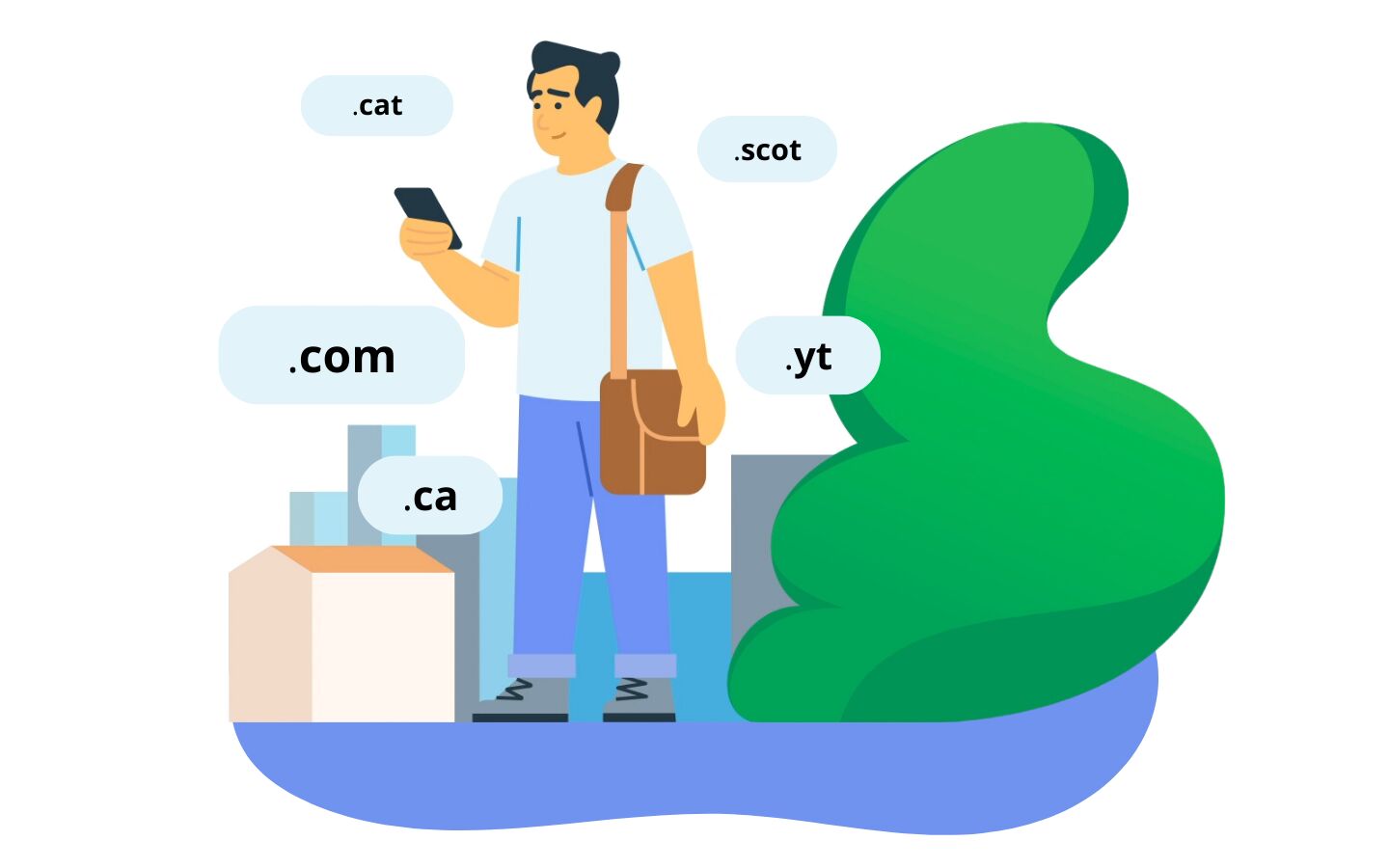
You probably know that you can freely register a domain with an extension (in other words: TLD) like .com or .net, but what if you want to get more creative with your domain? Well, in the case of domains like .day, .cat, or .pm you may need to meet additional requirements. The worst part is that your domain name might get suspended, or you may not even be able to register it if you fail to comply with certain domain extension regulations. In this article, you will learn how to register your domain without the risk of it being suspended by a domain registrar.
What is a TLD?
TLD stands for “Top-Level Domain" which is one of the highest levels in the hierarchical “Domain Name System" of the Internet just below the root domain. In simple words, those are domain extensions like: “.com", “.net", “.uk", etc. The most common TLDs types are:
- Generic Top-level Domains (gTLD)
- Sponsored Top-level domains (sTLD)
- Country Code Top-level Domains (ccTLD)
But what’s the point of discussing the text after the dot in your domain name? In fact, it’s different from your domain name itself, which you can freely choose without the risk of being suspended. To legally register domains with certain TLDs, you either need to provide proof of your ties to a country or region, submit your ID, or meet other requirements.
This domain is declared a safe space
As you can see in the address bar, there’s “https://" before “ikol.com" (double-click the link if you can’t see it). The “s" in “https://" signals that your connection to our website is secured with SSL or TLS protocol. It means that when you browse ikol.com, your data will be safely handled and encrypted, and no unauthorized person will be able to steal it.
However, not all websites use this protocol. Entering these sites is like walking around a dangerous, digital neighborhood at night — you never know where a hacker might be lurking, waiting to steal your confidential data. To prevent that, registering certain TLDs requires HTTPS, examples of those domain extensions are:
- .day
- .dev
- .app
- .new
- .page
All of these extensions are operated by Google and can be registered with a free SSL certificate on IKOL. So, if you're interested in registering a domain with one of these extensions, you can rest assured that your domain will not get suspended.
Declaration of intent
Although the Scottish did not declare independence from the United Kingdom, you need to declare the intended use for a .scot domain, which is aimed at people from Scotland or those with an affinity for Scotland. So, if you don’t have any ties to Scotland and don’t want to promote that beautiful region in any way, We wouldn’t recommend registering this domain, as there is a risk of your domain being suspended by the Dot Scot Registry.
And it gets even worse if you're a cat lover and want to secure a domain with .cat extension because .cat doesn't mean ‘cat’; it means Catalan! The .cat extension is specifically created for Catalan speakers or linguistic communities. Thankfully, there is a way out: if your website contains at least some text in the Catalan language, your domain won’t be suspended by Fundació puntCAT. So here’s the deal: if you want to start a blog on a .cat domain, either write it in Catalan or look for another option.
As you may have guessed, there are more TLDs like that, including:
- .gay – accepting additional terms and conditions for this domain extension.
- .travel – declaring a relationship with the travel industry.
- .sport – accepting additional terms for intended use for this domain extension.
Sponsored does not mean “for everyone"
Some sTLDs are meant for exclusive communities and organizations, such as pilots or HR departments. That’s why, when registering certain TLDs, you may be asked for information that could sound surprising. For example:
- .aero – a domain reserved for companies, organizations, associations, government agencies, and individuals in aerospace-related fields. To register this domain, you will need to provide your SITA (Société Internationale de Télécommunications Aéronautiques) ID and password.
- .xxx – for this domain, you’ll need to apply for an ICM Registry membership.
- .jobs – a domain with the .jobs sTLD must be based on the legal name of a company or organization and should be created by individuals within the company responsible for HR management.
We're a global village, but not here
Although the internet connects everyone and everything, some domains are restricted to people and organizations operating within a specific region. This is often the case with certain ccTLDs.
Europe
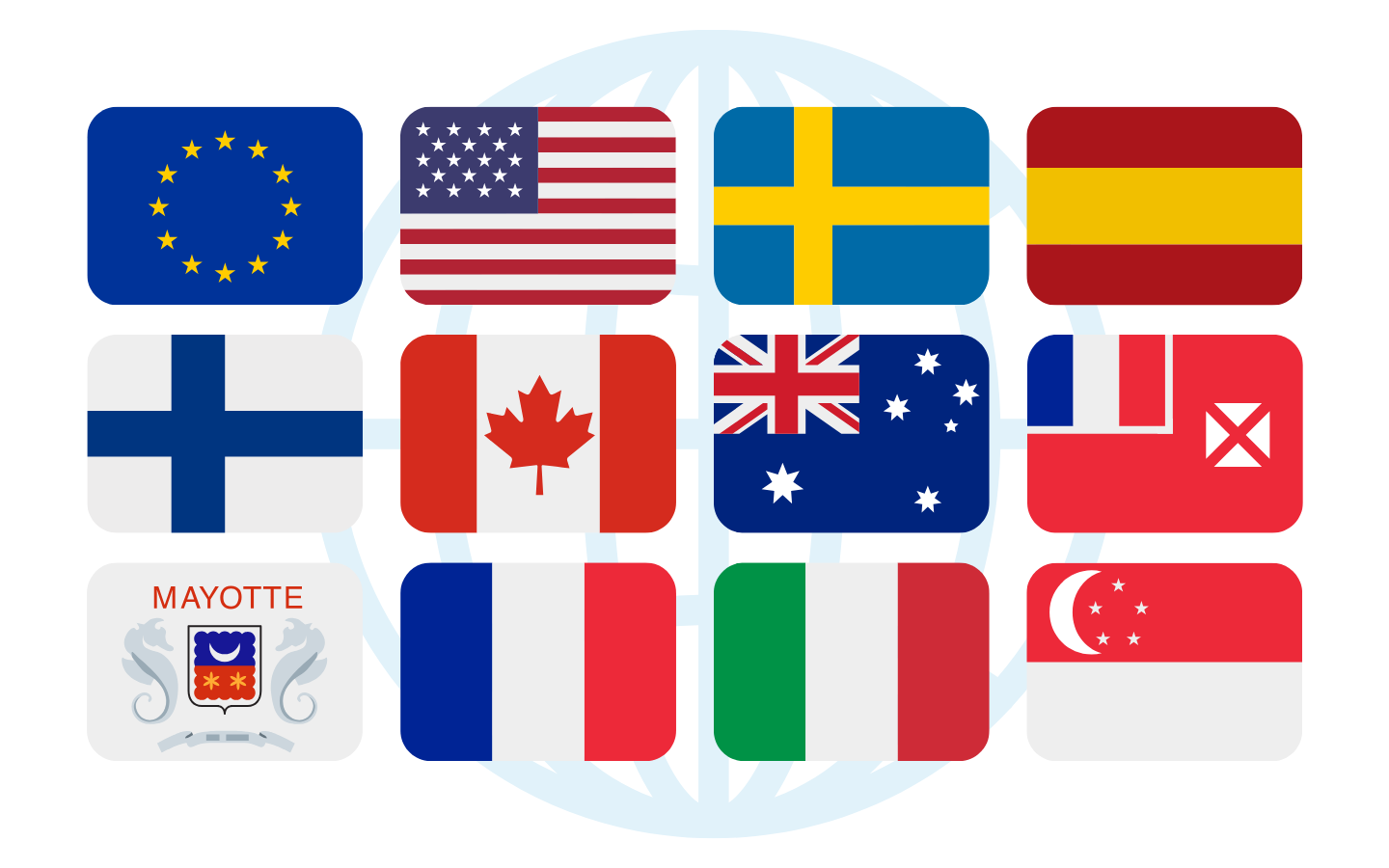
For example, the .eu domain is restricted to people and organizations from the European Union, Iceland, Liechtenstein, and Norway. Some European countries impose additional restrictions. To register a .es, .nom.es, or .org.es domain, you must provide your ID, VAT ID, or Resident Alien ID. Similarly, for the Swedish ccTLD (.se), you need to provide your ID number or VAT ID. To finish the registration process for .fi ccTLD (Finland), you must also provide your ID number or, for non-Finnish persons, a date of birth.
If you want to register a .it domain for your tech business, you must be able to prove that you have citizenship, residence, or a registered office in one of the countries of the European Economic Area (EEA), the Vatican City, the Republic of San Marino, the Swiss Confederation, or the United Kingdom, as .it is an Italian ccTLD.
Canada and the United States
Although most websites created in the US use a .com TLD, there’s a dedicated ccTLD for individuals and businesses from this country (.us). Unfortunately, obtaining a .us domain might feel like crossing the border, as you may be required to prove that you are legally authorized to operate in the United States, either as an individual or an organization.
The same goes for Canada, where you might have to prove your citizenship or ownership of a registered organization in the country to own a .ca domain. Otherwise, you could end up skating on thin ice—or worse, stuck in the penalty box for holding your domain against the rules.
Australia
Australia is mostly known for its open space and nature, but it’s not known for its domain extension. This is because, to register a .au domain or a .au-related domain like:
• .org.au
• .net.au
• .com.au
you will need to provide your registrar with proof of an Australian presence, whether it’s citizenship, permanent residency, or operating an organization based in Australia. The .au domain is designed to show that you’re either Australian or have a legitimate presence in the country.
Singapore
If you want to establish your presence in Singapore with a .sg or .com.sg domain and you can’t prove that you’re either Singaporean or operate a business there, you’ll need to register your domain through a local agent, which may complicate things. It’s even more complicated for .com.sg, as this domain is reserved only for organizations and businesses, meaning you cannot register it as an individual.
It’s not 18th century, don’t lose your head over a TLD
Quick geography lesson: Have you ever heard of a country called Mayotte? No? Neither have we, but how is it that there’s a .yt TLD for this region? Well, here’s a tip:
To register a domain name under this TLD, you must be a private individual or a business residing in a Member State of the European Union, or in Switzerland, Liechtenstein, Norway, or Iceland.
Does this mean Mayotte is in Europe? Not at all! Despite using the Euro as it's currency, this tiny island is located between Mozambique and Madagascar. And here’s the twist: the registration requirements we mentioned actually apply to the French ccTLD (.fr).
Why? Because Mayotte is a French overseas territory, and the .yt TLD shares the same registration rules as .fr — meaning you must be based in the EU or one of the specified countries.
Complicated, right? But Mayotte isn’t the only example. AFNIC (Association Française Pour le Nommage Internet en Coopération), the French organization is responsible for managing multiple France-related TLDs:
- .fr - for France
- .yt - for Mayotte
- .re - for Réunion island
- .tf - for French Southern and Antarctic Lands
- .pm – for Saint-Pierre-et-Miquelon
- .wf – for Wallis-et-Futuna
To register any of the domains listed above, you must be a private individual or a business residing in France, one of the specified regions, a Member State of the European Union, or in Switzerland, Liechtenstein, Norway, or Iceland.
Conclusion
So it turns out your domain can get suspended, and you don’t want that to happen, especially if you’ve already set up your website, right? But don’t worry—protecting yourself from it is actually not complicated. Just follow these simple tips:
- Use .com or your local ccTLD as your first choice. Alternatively, choose a gTLD without restricted use, like .net or .org.
- Keep your domain short and simple.
- Keep your domain relevant to your business.
These tips will help you not only keep your domain active but also ensure it aligns with your business and branding.