How should you set up your business
If you start your own business, there are some things you should consider, but choosing your business type is one of the most essential things. As a business beginner, you should consider one of the most accessible forms.
It would be best if you thought about :
- Sole Proprietorship
- General Partnership
- Limited Liability Company
Protect your assets
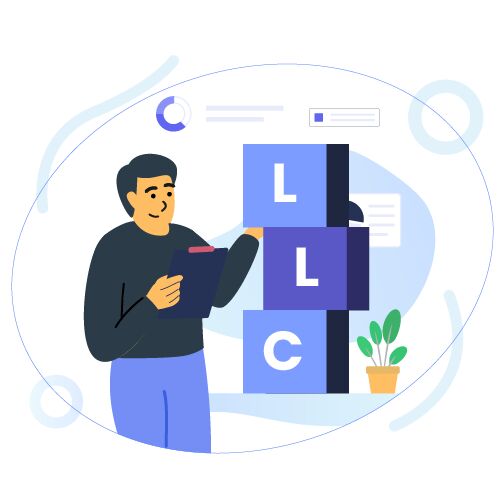
A limited liability company is an excellent choice to separate your business from your assets. LLC is an entity that requires formal creation. Members can choose which type of tax they want to pay and are not personally responsible for any company debts or liabilities. Limited liability companies have some starting costs and are responsible for annual reports. You can lose your limited liability if you don't fill your reports or if you blend your assets with business.
Advantages
- No financial responsibility
- Taxation flexibility
- No corporation limitations
- More reliable than a sole proprietorship or general partnership
Disadvantages
- Additional costs
- When a member joins or leaves an LLC, some states may require the LLC to be dissolved and re-formed with new membership
Work with your team
A general partnership is similar to a sole proprietorship, but two or more people operate together by agreement. They share their profits and losses. If you work as a general partnership, creating an operating agreement is a good idea. It is just a formal agreement between members, which is helpful to delegate specific tasks. If you are running your business under another name than the owner, you must apply for DBA (Doing business as), a form to change your business name.
Advantages
-
No necessity for the formal organization
-
Easy to start with
-
Easy Taxation
Disadvantages
-
Financial responsibility
-
Little attraction for investors
-
Depending on your partners

Easiest form
A sole proprietorship is the least complicated form of running a business because you can start without formalities. As an owner, you work independently, meaning every income and everything in business is yours. Still, you are financially responsible for any losses or debts your business will face because you and your business are not separate. If you are running your business under another name than the owner, you must apply for DBA (Doing business as), a form to change your business name.
Advantages
- No necessity for the formal organization
- Easy to start with
- Independence
- Easy Taxation
Disadvantages
- Financial responsibility
- Little attraction for investors
Check how your website could look like

Choose depending on what you need
A sole proprietorship and general partnership are accessible forms, both of which you can create quickly and use to check the market or operate on a tiny scale. There is no problem withdrawing from it, so you can test whether you want to run your chosen business.
Choosing LLC is ideal if you want to develop your business and protect your private assets; it can be crucial when operating for a long time on the market.
Remember, If you need employers, you have to apply for EIN. Every form requires it.