How to set up a new business in Arkansas
Starting a business in Arkansas is your chance to embrace independence and encounter new opportunities. While it may seem overwhelming, it's straightforward and involves just a few crucial steps. We're here to guide you through launching your business in The Natural State.
If you plan to open your service business, there are a few steps to follow.
- Choosing a business name
- Deciding on a business form
- Registration & legal steps
- Practical tips and information
- & more
Are you from another state?
Check out other guides if you need more detailed information about different states. You can click the state you are interested in on our map or choose it from the list below.
Choose a business name
Picking the right name for your business is the exciting first step on your journey as an entrepreneur. Think of it as naming a ship before it sets sail. Your business name should reflect your vision and capture what your business is all about.
However, there are some rules to follow. Your chosen name can't already be taken by another business in your state. Also, make sure to add the right words like "LLC" or "Inc." based on how your business is set up. Avoid using words that are not allowed, and you're on your way to having a unique and legal business name.

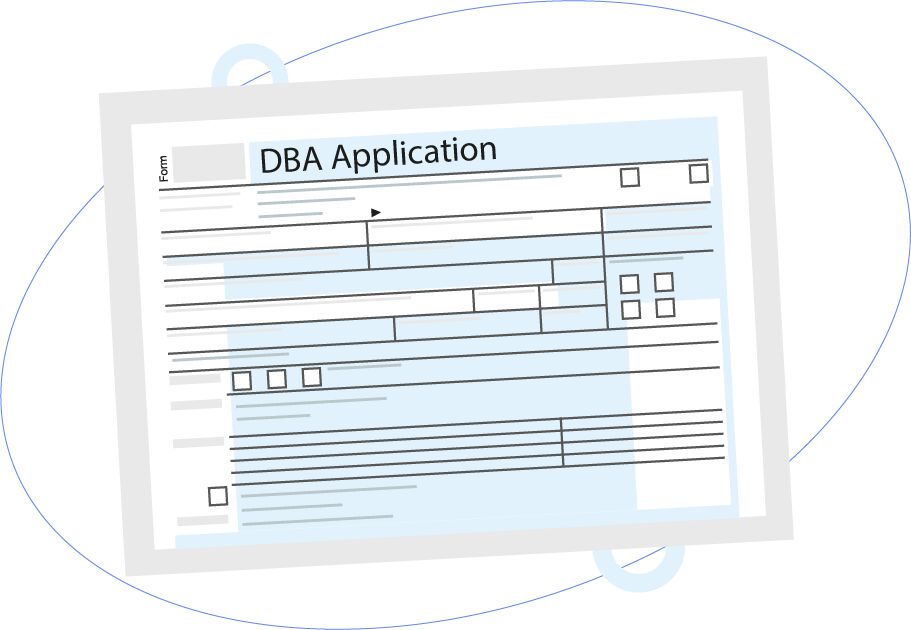
Register your Assumed Business Name
Once you have decided on a name for your company, it is important to take the necessary steps to register and secure it. To begin the registration process, file an application for fictitious name with the county clerk in each county where a business office is or will be maintained. There is a fee associated with this registration, which depends on the entity type associated with this registration.
Decide on business structure
Choosing your company structure is a crucial decision that shapes the very core of your business. It affects your legal responsibilities, taxes, how you manage, and how you plan to grow. Let's look at three common options:
-
Sole Proprietorship: This is the simplest form, great for solo entrepreneurs. As a sole proprietor, you have full control but also full personal responsibility for business debts.
-
Limited Liability Company (LLC): It's a great mix of simplicity and liability protection. LLCs offer the flexibility of a sole proprietorship while keeping your personal assets safe from business debts. It's a popular choice for small businesses.
-
Partnership: When two or more people team up, you have a partnership. They can be general (where all partners share liability) or limited (where some partners have limited liability). Partnerships involve shared decision-making but may require complex agreements.
Each structure has its own pros and cons. The key is to pick the one that best fits your unique business goals and vision.

Generate your website for free
Experience custom website creation like never before. It's quick, it's free, and it's tailored just for your business.
No worries – we'll have everything done in under a minute

Start your journey now
& enjoy the difference
Register your business
Getting your business officially registered is a vital step to make it legally recognized and ensure it follows the rules set by the state. The steps can be a bit different depending on what type of business you have. Here's an overview of how to register for sole proprietorships, LLCs, and partnerships in Arkansas. Pick the one that matches your business type to learn more about the registration process.
Now, let's take a closer look at how to register each type of business structure in Arkansas.
How To Start A Sole Proprietorship:
Starting a sole proprietorship in Arkansas is a straightforward process. There are no complex formalities or fees involved, making it an ideal choice for entrepreneurs looking to launch their own ventures. To begin, simply start working.
However, while the process is simple, there are additional steps that can be beneficial. Although not strictly required, many sole proprietors find them advantageous.
- First, consider acquiring a "Doing Business As" (DBA) name. A DBA allows you to use an assumed business name rather than your personal name, which can enhance professionalism and customer trust. It also enables you to open a business bank account under your DBA name.
- Additionally, determine your tax obligations. Sole proprietors often use their Social Security Number for tax purposes, but obtaining an Employer Identification Number (EIN) is advisable for privacy. Be aware of sales tax obligations if you sell products and research other applicable state taxes.
- Finally, be aware of licenses and permits. Specific industries may need additional licenses or permits. Always ensure compliance with local regulations as well.
Three primary partnership models exist:
-
General Partnership: No complex formalities or fees are involved, but you don't have limited liability, which means you are responsible for all debts and losses.
-
Limited Partnership (LP): LPs feature limited and general partners. Limited partners hold no liability beyond their investment, while general partners maintain full liability.
-
Limited Liability Partnership (LLP): LLPs safeguard partners from uninvolved debts, particularly favored by high-liability professionals. LLPs adhere to general partnership taxation.
Commencing a Partnership:
-
Register the Business Name: Verify availability in the state's Business Database and register it with Arkansas's government.
-
Complete Necessary Paperwork: For GP, you don't need any documents, but you can consider filling out DBA; LPs must file Certificate of Limited Partnership with the Secretary of State and are required to file informational returns with the Internal Revenue Service and Arkansas Income Tax Division; LLPs must file a Qualification of Limited Liability Partnership with the Secretary of State and are required to file informational returns with the Internal Revenue Service and Arkansas Income Tax Division.
-
Secure an EIN and Licenses: Secure an Employer Identification Number (EIN) from the IRS when hiring employees. Explore additional state licenses and tax obligations based on your business activities.
Establishing an LLC:
-
Articles of Organization: To establish your LLC officially, you must file Articles of Organization with the Arkansas Secretary of State. This document includes essential details about your LLC, such as its name, registered agent, and address of the principal office. The filing fee for this document is $50.
-
Registered Agent Appointment: Designating a registered agent is mandatory for all Arkansas LLCs. This agent accepts legal documents and official mail on behalf of your LLC. You can choose an individual or a business entity to serve as your registered agent.
-
Operating Agreement: While not filed with the state, drafting an Operating Agreement is recommended. This internal document outlines the rules and structure of your LLC, including member roles and responsibilities. Legal fees for creating this document can vary.
-
Annual Report: Arkansas requires LLCs to file an annual report, which includes updated information about your business.
Starting an LLC in Arkansas entails document preparation and filing fees, which vary depending on your specific circumstances and needs. Consult with professionals or use online services to streamline the process and ensure compliance with state regulations.
Consider creating operating agreement
An operating agreement can offer important advantages to specific business entities in Arkansas, like Limited Liability Companies (LLCs), Limited Liability Partnerships (LLPs), and Limited Partnerships (LPs).
It's highly recommended to create an operating agreement because it plays a key role in setting up the inner workings, ownership rights, and day-to-day procedures of your business. For LLPs, having an operating agreement is essential for defining partner rights, how profits are shared, and other operational aspects. Moreover, LPs may find it crucial to have an operating agreement to clearly outline partner roles, how profits are distributed, decision-making processes, and procedures for ending the partnership.

Obtain EIN
Securing an Employer Identification Number (EIN) is a pivotal step in business registration. This unique nine-digit number, also known as a Federal Tax ID Number, is crucial for your business's identity, similar to how a social security number works for individuals.
An EIN is required for several reasons:
-
Taxation: It's used to file federal taxes, withhold employee taxes, and report business income.
-
Hiring Employees: If your business plans to hire employees, an EIN is necessary for payroll and tax withholding.
-
Opening Business Bank Accounts: Most banks require an EIN to open a business bank account, separating personal and business finances.
-
Legal Compliance: It's needed for legal documentation, contracts, and specific business licenses.
The application process is typically straightforward and can be done online through the IRS website. Once you have your EIN, you'll use it for various financial and legal purposes to ensure your business operates smoothly and complies with tax regulations.

Obtain licenses and permits
This process includes identifying the exact permits your business requires, following local zoning laws, and meeting state regulatory demands. Acquiring these licenses and certificates correctly guarantees that your business operates within the bounds of the law and avoids potential problems in the future.
Arkansas imposes specific state-level licenses and permits on various business types and industries. These may include professional licenses, retail permits, and contractor certifications. It's essential to identify which licenses and permits pertain to your business operations at the state level. Ensure you complete the necessary applications and meet all requirements to maintain compliance and avoid any legal complications.
Obtain licenses and permits
This process includes identifying the exact permits your business requires, following local zoning laws, and meeting state regulatory demands. Acquiring these licenses and certificates correctly guarantees that your business operates within the bounds of the law and avoids potential problems in the future.

Acquire customers
Now that your business is running, strengthen your online presence with IKOL. Secure your own domain, build a professional website, and expand your reach. Unlock growth opportunities today!